Safety Standards for AI Content Publishing

Safety Standards for AI Content Publishing


Safety Standards for AI Content Publishing

An Educational Overview of Compliance, Transparency, and Consumer Protection in AI-Generated Content


This article explains the safety standards applied to AI-generated content in digital publishing. Specifically, it outlines legal considerations under Philippine regulations, global consumer protection frameworks, and platform-level policies. In addition, it describes how transparency, accuracy, and data protection are addressed in AI-assisted content systems.


Regulatory and Legal Foundations (Philippines)

AI-generated content published in digital environments may fall under several Philippine laws. In particular, these regulations address consumer protection, electronic communications, and data privacy:

  • Consumer Protection
    The Consumer Act of the Philippines (RA 7394) addresses misleading or deceptive representations in advertising and public communications. In this context, it applies to digital content that may influence consumer understanding.
  • Electronic Communications
    The E-Commerce Act of 2000 (RA 8792) governs electronic data messages and digital transactions. As a result, it also covers content distributed through online platforms.
  • Data Privacy and Processing
    The Data Privacy Act of 2012 (RA 10173) regulates the collection, storage, and processing of personal data. Accordingly, AI systems that handle user data must align with principles such as transparency, legitimate purpose, and proportionality.
  • Fraud and Misrepresentation
    The Revised Penal Code includes provisions related to fraud and false representation. Therefore, misleading AI-generated content may fall under these provisions when applicable.
  • Advertising and Trade Regulations
    The Department of Trade and Industry (DTI) provides guidelines on fair advertising and consumer protection. Similarly, these guidelines extend to digital marketing and AI-assisted communications.
  • Data Protection Oversight
    The National Privacy Commission (NPC) enforces compliance with data privacy standards. In practice, this includes obligations for data controllers and processors managing AI-related data.


Global Consumer Protection and Platform Standards

AI content publishing is also influenced by international standards and platform policies. More broadly, these frameworks promote transparency and accountability:

  • Transparency and Disclosure
    Global guidelines, including those aligned with the Federal Trade Commission (FTC), emphasize clear disclosure when content is generated or assisted by AI. For example, labeling practices may indicate automated involvement.
  • Search and Content Quality Systems
    Documentation from Google Search Central describes content quality expectations. Notably, these include Experience, Expertise, Authoritativeness, and Trustworthiness (EEAT).
  • Ad and Content Policies
    Platforms such as Meta Platforms and TikTok maintain public policies governing advertising accuracy and misinformation. In addition, these policies address synthetic media disclosures.
  • AI Safety and Risk Mitigation
    AI systems are expected to reduce risks related to misinformation, bias, and harmful outputs. To support this, safeguards and human oversight may be implemented where applicable.


Core Safety Principles in AI Content Publishing


Accuracy and Verifiability

Content should be based on verifiable information. If uncertainty exists, it is appropriate to indicate limitations or omit unverified claims.


Non-Deceptive Communication

AI-generated content must avoid misleading representations. In other words, exaggerated claims, fabricated data, or unclear sourcing are excluded.


Transparency of AI Use

Where relevant, content may include disclosures indicating AI assistance. This approach supports user awareness and informed interpretation.


Data Privacy Protection

AI systems must handle personal data in accordance with applicable privacy laws. Consequently, data collection may be limited and processing secured.


Content Moderation and Risk Control

Systems may implement safeguards to reduce harmful or non-compliant outputs. At the same time, monitoring processes may support ongoing compliance.


AI Content and Digital Marketing Context

In digital marketing and SEO environments, AI-generated content interacts with multiple systems. For instance, these include:

  • Search Systems (SEO / AEO)
    AI-generated pages may be evaluated using ranking systems. In this case, factors such as relevance and trust signals are considered.
  • Analytics and Attribution Systems
    Data collected from user interactions may be subject to privacy regulations. Additionally, platform-specific policies may apply.
  • Ad Platforms and Distribution Channels
    AI-generated ad creatives or copy must comply with platform rules. Likewise, disclosure standards may be required.


Context

In the evolution of digital publishing, automated systems have shifted from rule-based generation to machine learning models. Over time, these systems have become capable of producing natural language at scale. As a result, governance frameworks addressing accuracy, transparency, and accountability have increased in importance. Meanwhile, regulatory bodies and technology platforms continue to update policies to reflect these developments.


FAQs

What is AI-generated content?
AI-generated content refers to text, images, or media created using artificial intelligence systems trained on data patterns. In some cases, it may be fully automated, while in others it is assisted by human input.

Why is disclosure important in AI content?
Disclosure helps readers understand how content was created. Furthermore, it supports transparency and aligns with consumer protection standards.

How does data privacy apply to AI publishing?
Data privacy laws regulate how personal information is collected and used. Therefore, AI systems must follow principles such as consent, purpose limitation, and data minimization.


Trusted Sources

  • Google Search Central — Search Quality Guidelines and documentation
  • National Privacy Commission (Philippines) — Data Privacy Act resources
  • Department of Trade and Industry (Philippines) — Consumer protection and advertising guidelines
  • Federal Trade Commission — Advertising and disclosure guidelines
  • Meta Platforms — Advertising Standards and Transparency documentation
  • TikTok — Advertising and Branded Content Policies
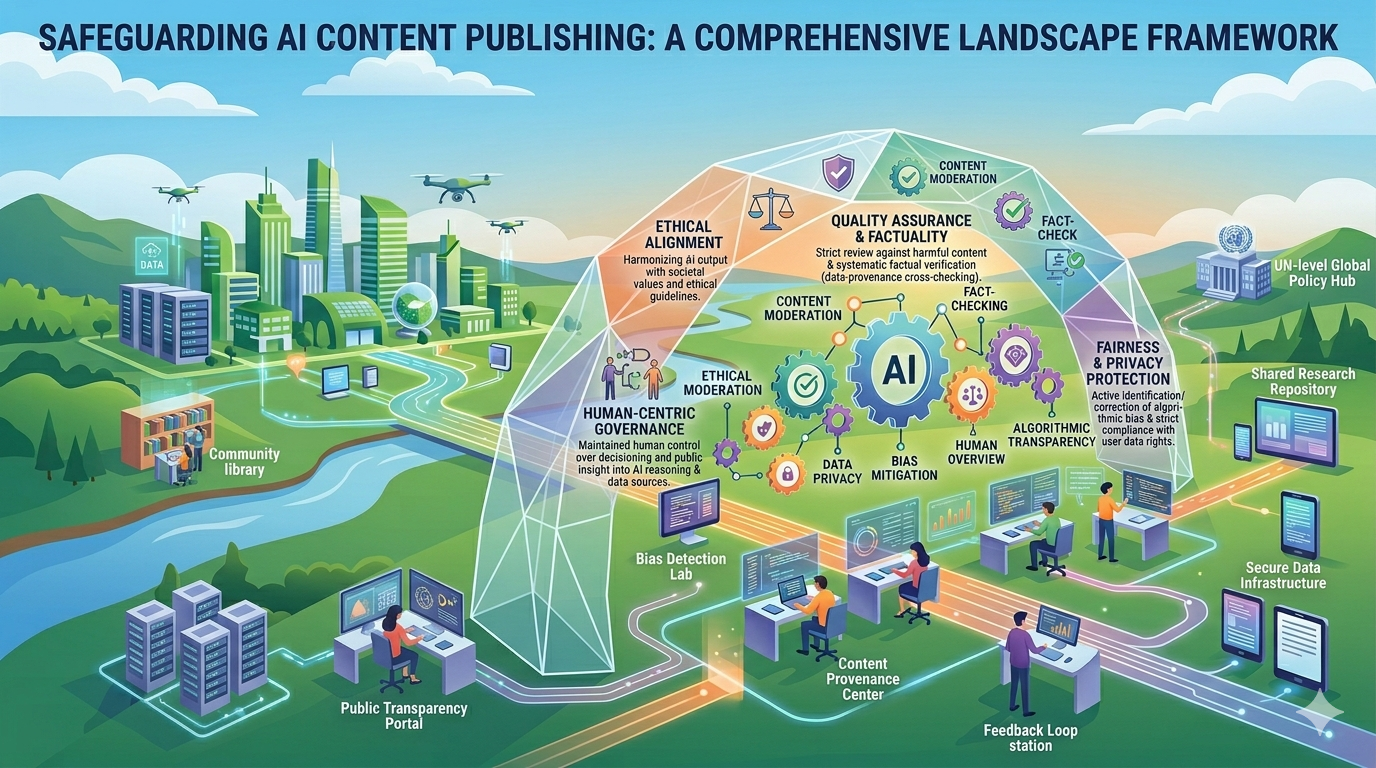
 

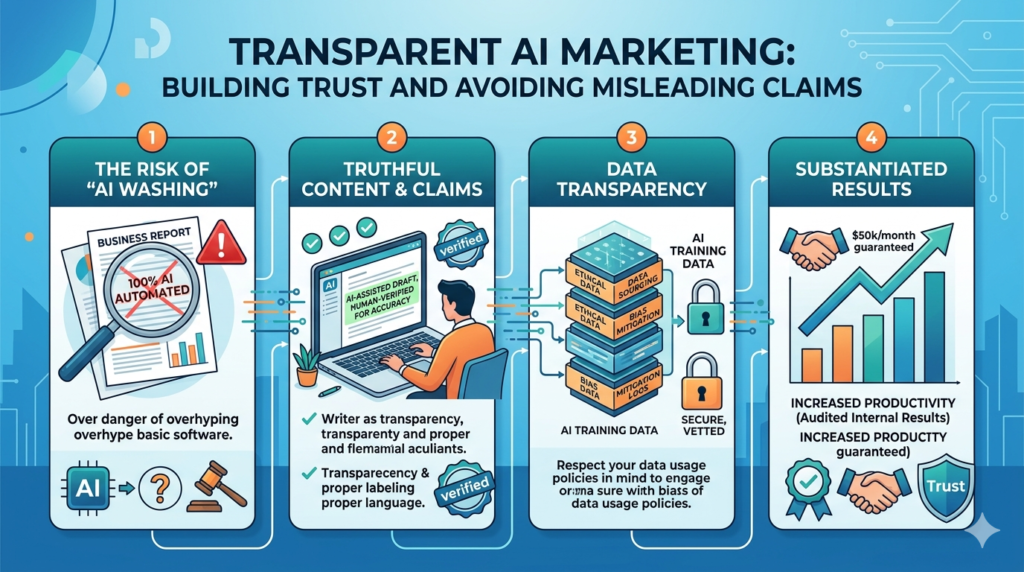
Structured diagram showing AI content workflows, regulatory layers, and transparency checkpoints in digital publishing

Diagram illustrating components of AI content publishing standards


Disclaimer

This content is for general informational and educational purposes only. It does not constitute professional marketing, legal, financial, or business advice. References to digital marketing tools, platforms, SEO strategies, or AI systems do not imply endorsement or guarantee results. Readers are encouraged to consult verified official sources and licensed professionals before making business or marketing decisions.
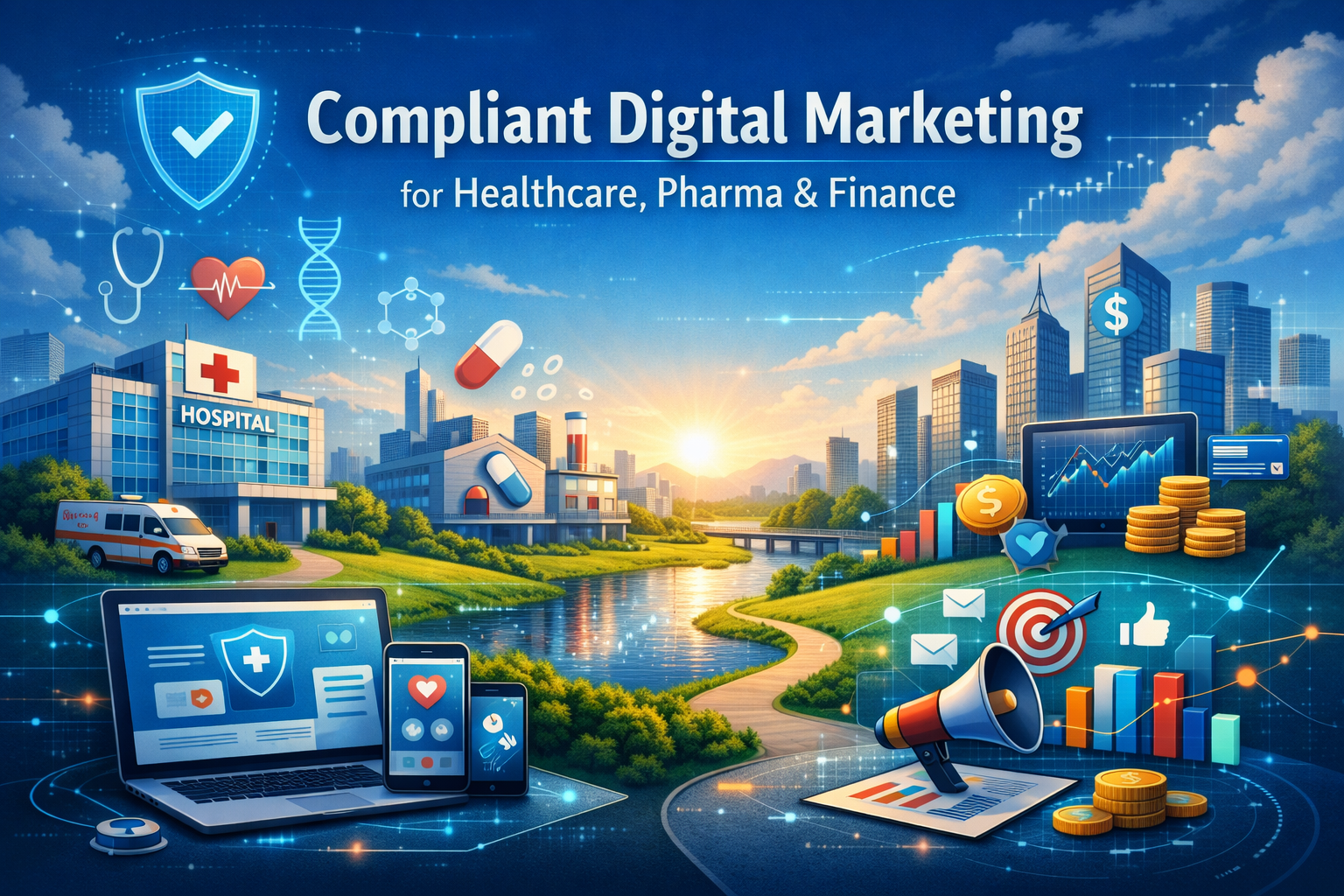
Compliant Digital Marketing for Healthcare, Pharma, Finance

Compliant Digital Marketing for Healthcare, Pharma, Finance

Healthcare, Pharmaceutical, and Financial businesses operate in the most regulated and trust-sensitive digital environment. With Google’s December 11, 2025 Core Update reinforcing YMYL standards, EEAT authority signals, AI Search, and Answer Engine Optimization, brands that fail to meet strict credibility and compliance requirements risk losing visibility, customer trust, and revenue.

Principeng Hari (Roland Diaz) helps regulated-industry business owners create fully compliant, algorithm-resilient digital ecosystems designed to strengthen authority, protect brand reputation, and drive sustainable growth.

Website: https://principenghari.com/

Specialized Digital Marketing for Regulated and High-Trust Industries

Your business requires marketing that prioritizes accuracy, regulatory alignment, transparency, and verifiable expertise. My services are structured to meet the evolving expectations of Google Search, AI-driven discovery platforms, and compliance frameworks.

Google EEAT and YMYL-Compliant Content and SEO

I develop expert-level content systems and SEO strategies that support credibility, fact-based authority, structured data implementation, entity optimization, and knowledge graph alignment. Every strategy is designed to reinforce expertise, experience, authoritativeness, and trustworthiness while minimizing regulatory and reputational risks.

SEO, AEO, GEO, and AI Search Optimization

I optimize websites and content for traditional search, AI Overviews, voice search, zero-click results, and generative AI platforms such as Google AI, Bing Copilot, ChatGPT, and Perplexity. This includes schema markup, structured content frameworks, topical authority modeling, and answer engine positioning.

Healthcare, Pharmaceutical, and Financial Compliance Strategy

I ensure marketing messages align with industry regulations and platform advertising policies, reducing exposure to misleading claims, prohibited content, and compliance violations. Strategies are designed to strengthen consumer trust, legal defensibility, and long-term brand stability.

Compliant Websites, Mobile Platforms, and Social Media Marketing


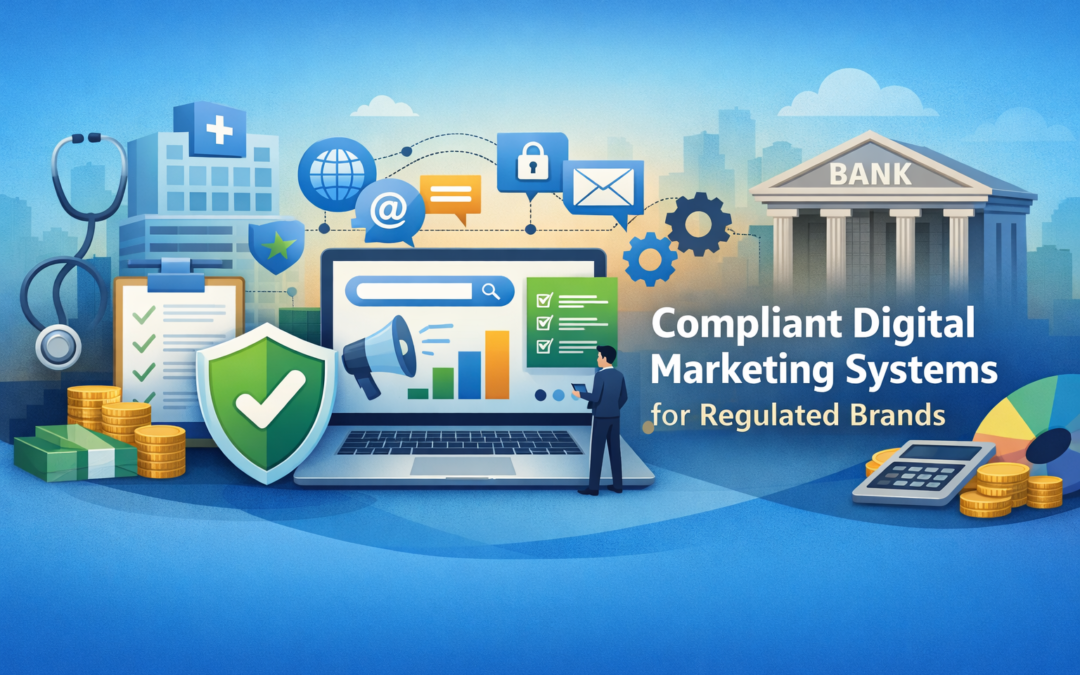
Diagram of compliant digital marketing systems for regulated industries in the Philippines

Infographic showing structural elements of compliant digital marketing systems

I build and optimize secure, compliant websites, mobile-ready platforms, and regulated social media campaigns. This includes conversion-focused UX, privacy and consent frameworks, secure data handling, accessibility compliance, and platform policy adherence.

Paid Advertising, CRM, and Marketing Automation

I design policy-compliant paid advertising campaigns, funnel systems, email marketing automation, CRM integrations, and retargeting strategies. Every campaign follows platform ad regulations for healthcare and financial services while maximizing ROI and lead quality.

Agentic AI Marketing and Automation Systems

I deploy AI-powered content pipelines, chatbots, lead qualification systems, and automated customer journeys with human oversight, compliance safeguards, and brand-safe governance frameworks. This ensures AI is used responsibly while maintaining trust and accuracy.

Why Healthcare, Pharma, and Financial Business Owners Work with Principeng Hari

I bring deep expertise in regulated digital marketing, SEO, AI-driven growth, compliance strategy, and high-trust brand positioning. My approach focuses on long-term authority, algorithm resilience, and measurable business outcomes rather than short-term tactics.

Clients choose my services because I understand how to balance growth, compliance, risk management, and reputation protection in industries where credibility is non-negotiable.

Start Building a Compliant, High-Authority Digital Presence

If you own a Healthcare, Pharmaceutical, or Financial business and want to increase visibility, strengthen authority, ensure compliance, and scale safely, I can help you build a future-proof digital growth system aligned with the latest Google updates and AI-driven search behaviors.

Connect with me today to discuss a tailored strategy.

Website: https://principenghari.com/
WhatsApp: +639454835167
Email: roland@principenghari.com
Hashtag: #principenghari

Relevant hashtags (comma-separated):
#principenghari, #HealthcareMarketing, #PharmaMarketing, #FinancialMarketing, #EEATSEO, #YMYLCompliance, #AISEO, #DigitalCompliance, #AgenticAI, #RegulatedMarketing

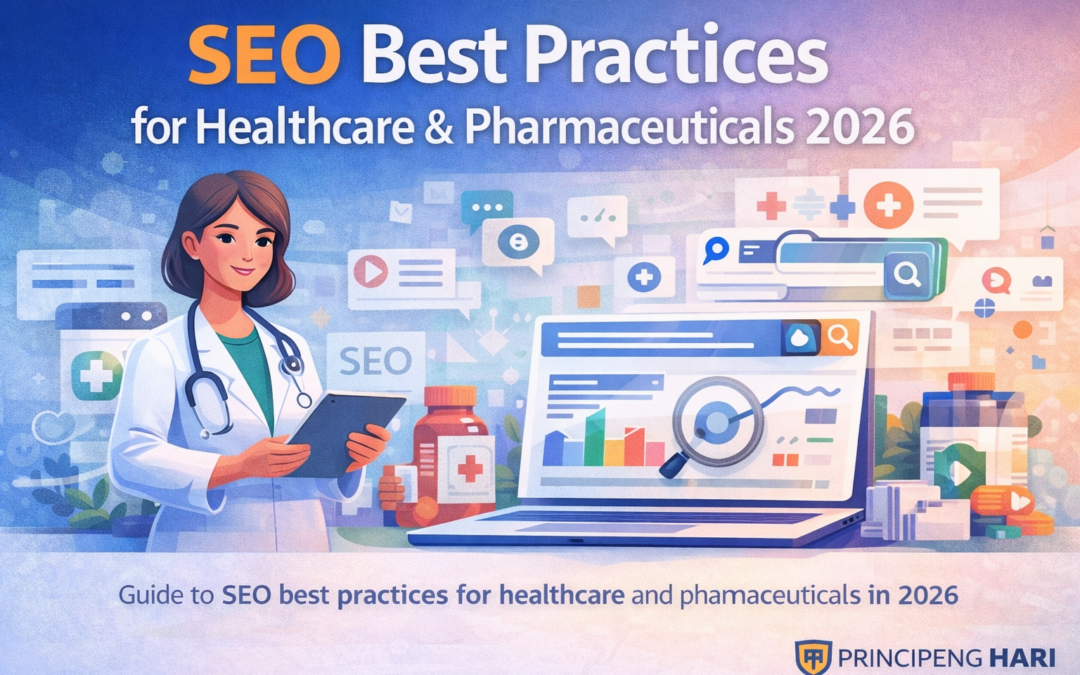
SEO Best Practices for Healthcare and Pharmaceuticals in 2026

SEO Best Practices for Healthcare and Pharmaceuticals in 2026


1. Introduction & Scope

In 2026, search engine optimization (SEO) has become a critical tool for healthcare and pharmaceutical organizations seeking visibility online. Unlike traditional SEO, healthcare SEO operates under stringent YMYL (Your Money or Your Life) guidelines, meaning that content must be accurate, evidence-based, and legally compliant.

Healthcare patients, caregivers, and professionals increasingly rely on search engines to find safe, reliable, and up-to-date medical information. For pharmaceutical companies, clinics, and health startups, a strong SEO strategy is essential not only for visibility but also to build trust, maintain compliance, and avoid legal penalties.

With AI-driven search results, semantic indexing, and voice search adoption in 2026, healthcare organizations must optimize both technical and content aspects of their websites. From structured data implementation to authoritative citations, SEO in healthcare demands meticulous planning and adherence to ethical standards.

Link to Healthcare SEO Hub
Next Funnel Link: Awareness → Consideration

2. Key Facts Summary

Healthcare and pharmaceutical searches have skyrocketed over the last five years, with Google reporting over 70% of health-related queries now conducted via mobile devices. AI-powered search algorithms, including BERT and MUM, prioritize authoritative, reliable, and locally relevant content, making E-E-A-T signals more important than ever.

YMYL content, which includes drug information, treatment guidance, and health advice, requires strict adherence to regulatory frameworks such as HIPAA, GDPR, FDA regulations, and Australia’s TGA standards. Failure to comply can result in penalties, delisting from search engines, or legal action.

In 2026, best practice healthcare SEO integrates:

  • Structured data and schema markup for medical content

  • Expert-reviewed and evidence-based content

  • Geo-targeted optimization for local healthcare providers

  • AI-friendly content formats such as FAQs and conversational queries

Download Quick Stats Sheet
Next Funnel Link: Awareness

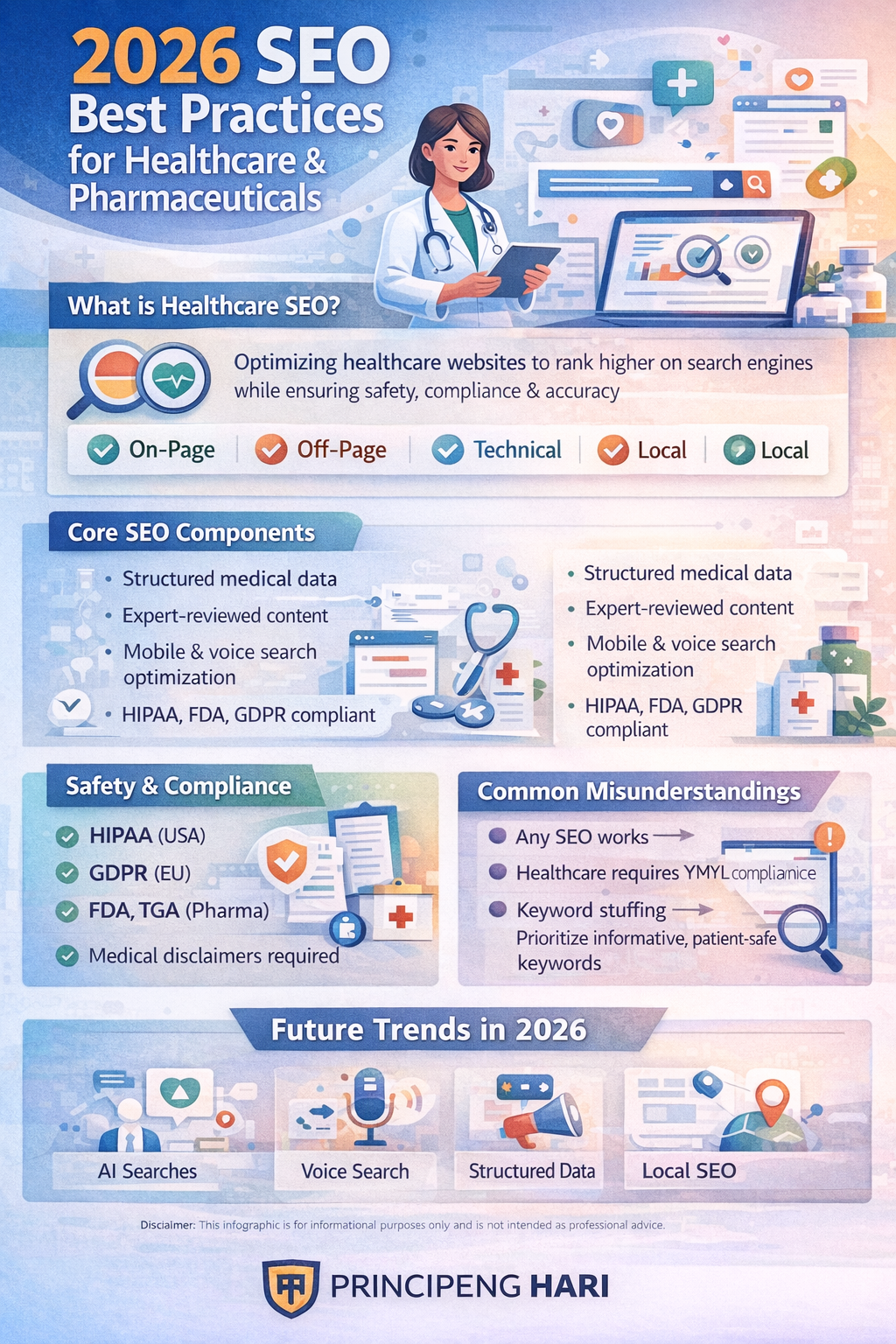
Infographic explaining healthcare SEO strategy, compliance, and E-E-A-T signals in 2026

Key steps to optimize healthcare and pharmaceutical websites safely in 2026

3. What Is Healthcare SEO?

Healthcare SEO refers to search engine optimization specifically designed for the healthcare and pharmaceutical industries. Unlike general SEO, healthcare SEO must balance visibility with accuracy, compliance, and patient safety.

Key elements include:

  • On-page optimization: Meta tags, headings, keyword placement, and readability

  • Technical SEO: Fast loading pages, mobile-first design, secure HTTPS, and structured data

  • Off-page SEO: Backlinks from reputable medical sources and institutions

  • Local SEO: Optimizing for clinics, hospitals, and pharmacy locations

Healthcare SEO ensures that patients and professionals can find trusted information easily, while companies remain compliant with YMYL rules. This specialized SEO strategy is essential in 2026 due to increased regulatory scrutiny and AI-driven search results.

Link to Introductory Guide
Next Funnel Link: Awareness

4. Who This Information Applies To

This guide is essential for:

  • Digital marketers in healthcare and pharma

  • Pharmaceutical companies managing product information online

  • Hospital administrators and clinic managers seeking to attract patients safely

  • Health startups building digital presence for telehealth services

The information ensures that professionals can optimize their websites effectively while adhering to regulatory standards and maintaining trustworthiness. By implementing these best practices, organizations can increase visibility, protect patients, and enhance credibility.

Join Newsletter for Updates
Next Funnel Link: Awareness

5. How SEO Works in Pharmaceuticals

SEO in pharmaceuticals involves a multi-layered approach to content, technical architecture, and compliance. It includes:

  • Content Strategy: Writing evidence-based articles, FAQs, and guides reviewed by certified experts.

  • Technical SEO: Fast load times, secure connections, structured data for drugs and treatments.

  • Authority Signals: Citations from peer-reviewed journals, trusted health institutions, and official medical organizations.

  • AI Optimization: Using conversational queries and semantic search-friendly content.

In pharmaceuticals, accuracy is paramount. A poorly optimized website risks misinforming patients, harming brand trust, and violating regulations. 2026 SEO requires both digital marketing expertise and medical domain knowledge.

Link to Technical SEO Checklist
Next Funnel Link: Awareness

6. Core Components / Types

Healthcare and pharmaceutical SEO relies on several core components:

1. On-Page SEO: Clear headings, meta descriptions, alt text, and structured content optimized for readability and compliance.

2. Off-Page SEO: Backlinks from verified medical sources, scientific journals, or government health agencies.

3. Local SEO: Google Business Profiles for clinics, pharmacies, and hospitals; geo-targeted content.

4. Technical SEO: Fast mobile-friendly pages, HTTPS security, sitemap submission, structured data (Schema.org MedicalEntity, Drug, FAQPage).

These elements ensure visibility, compliance, and trust while meeting modern search engine requirements.

Link to Core SEO Toolkit
Next Funnel Link: Awareness

7. Benefits, Limitations & Risks

Benefits:

  • Higher visibility for patients and professionals

  • Enhanced trust and credibility

  • Increased patient acquisition and engagement

Limitations:

  • Slow adoption due to compliance constraints

  • Complexity of managing YMYL content

  • High competition in pharma and healthcare niches

Risks:

  • Penalties for misinformation or non-compliance

  • Reduced rankings if E-E-A-T standards are not met

  • Potential legal liabilities under HIPAA, GDPR, or TGA regulations

A thoughtful approach balances visibility, compliance, and patient safety while minimizing exposure to risk.

Link to Risk Mitigation Guide
Next Funnel Link: Awareness

8. Safety, Compliance & Regulations

Healthcare SEO is governed by:

  • HIPAA (US): Protects patient privacy and data security

  • GDPR (EU): Governs user data processing and consent

  • FDA (US): Regulates online pharmaceutical claims

  • TGA (Australia): Ensures drug information accuracy

  • Local medical boards globally

Content must include:

  • Disclaimers

  • Proper citations

  • Expert review for YMYL topics

Compliant websites build trust, avoid penalties, and ensure patient safety.

Link to Compliance Resource
Next Funnel Link: Awareness

9. Common Misunderstandings

  • “Any SEO strategy works in healthcare” → FALSE, requires compliance

  • “Keyword stuffing is safe” → FALSE, harms rankings and credibility

  • “AI-generated content replaces expert review” → FALSE, human verification is mandatory

Understanding these pitfalls prevents legal issues and maintains authority.

Link to Common Mistakes Guide
Next Funnel Link: Awareness

10. Evidence, Standards & Sources

Use peer-reviewed and official sources:

  • World Health Organization (WHO)

  • U.S. Food & Drug Administration (FDA)

  • Therapeutic Goods Administration (TGA, Australia)

  • PubMed and medical journals

  • Google’s Search Quality Evaluator Guidelines

Evidence-based SEO ensures compliance, trust, and effectiveness.

Access Curated Source Library
Next Funnel Link: Awareness

11. Future Developments in 2026

Key trends:

  • AI-driven SEO: Semantic search, conversational queries

  • Voice search optimization for patients seeking urgent info

  • Enhanced structured data for medical FAQs, treatments, and drug information

  • Geo-targeted and hyper-local content for clinics and pharmacies

Healthcare organizations must adapt quickly to emerging technologies while maintaining regulatory compliance.

Sign Up for Future Trends Webinar
Next Funnel Link: Awareness

12. Frequently Asked Questions

Q1: How do I optimize medical content safely?
A: Always use certified experts, cite authoritative sources, and include disclaimers.

Q2: Which schema types are mandatory?
A: MedicalEntity, Drug, FAQPage, Article, and Organization for health providers.

Q3: How can I rank locally for my pharmacy?
A: Optimize Google Business Profile, include local schema, and geo-targeted content.

Visit FAQ Hub
Next Funnel Link: Awareness

13. Final Considerations & Next Steps

To succeed in 2026, healthcare and pharmaceutical organizations must:

  • Prioritize accuracy and compliance

  • Implement structured data and E-E-A-T signals

  • Optimize for mobile and AI-driven search

  • Maintain regular expert review

By following these guidelines, organizations can move from Awareness to Consideration, building both visibility and trust.

Link to Consideration Stage Guide
Next Funnel Link: Consideration