SEO Best Practices for Healthcare and Pharmaceuticals in 2026
1. Introduction & Scope
In 2026, search engine optimization (SEO) has become a critical tool for healthcare and pharmaceutical organizations seeking visibility online. Unlike traditional SEO, healthcare SEO operates under stringent YMYL (Your Money or Your Life) guidelines, meaning that content must be accurate, evidence-based, and legally compliant.
Healthcare patients, caregivers, and professionals increasingly rely on search engines to find safe, reliable, and up-to-date medical information. For pharmaceutical companies, clinics, and health startups, a strong SEO strategy is essential not only for visibility but also to build trust, maintain compliance, and avoid legal penalties.
With AI-driven search results, semantic indexing, and voice search adoption in 2026, healthcare organizations must optimize both technical and content aspects of their websites. From structured data implementation to authoritative citations, SEO in healthcare demands meticulous planning and adherence to ethical standards.
Link to Healthcare SEO Hub
Next Funnel Link: Awareness → Consideration
2. Key Facts Summary
Healthcare and pharmaceutical searches have skyrocketed over the last five years, with Google reporting over 70% of health-related queries now conducted via mobile devices. AI-powered search algorithms, including BERT and MUM, prioritize authoritative, reliable, and locally relevant content, making E-E-A-T signals more important than ever.
YMYL content, which includes drug information, treatment guidance, and health advice, requires strict adherence to regulatory frameworks such as HIPAA, GDPR, FDA regulations, and Australia’s TGA standards. Failure to comply can result in penalties, delisting from search engines, or legal action.
In 2026, best practice healthcare SEO integrates:
-
Structured data and schema markup for medical content
-
Expert-reviewed and evidence-based content
-
Geo-targeted optimization for local healthcare providers
-
AI-friendly content formats such as FAQs and conversational queries
Download Quick Stats Sheet
Next Funnel Link: Awareness
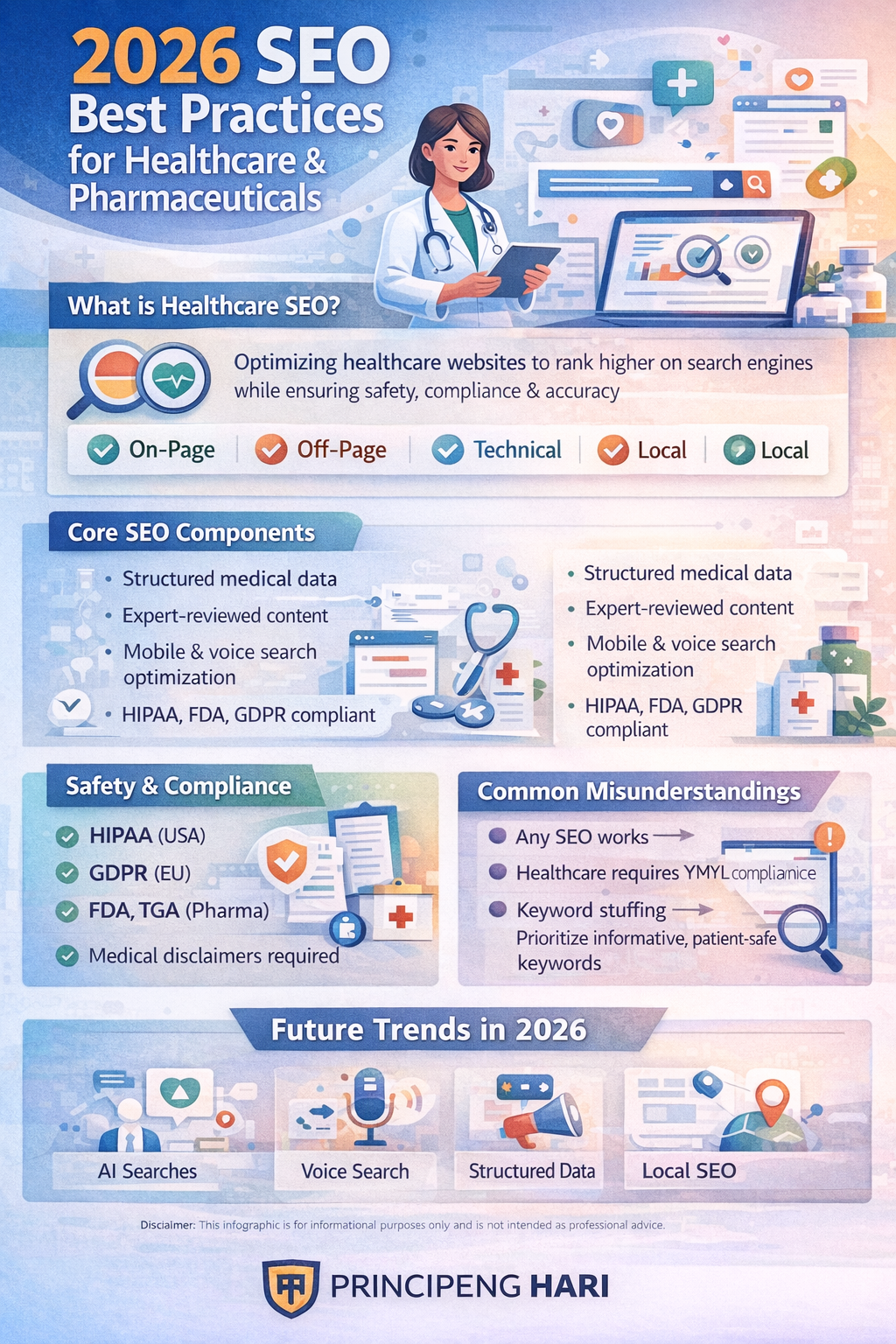
Key steps to optimize healthcare and pharmaceutical websites safely in 2026
3. What Is Healthcare SEO?
Healthcare SEO refers to search engine optimization specifically designed for the healthcare and pharmaceutical industries. Unlike general SEO, healthcare SEO must balance visibility with accuracy, compliance, and patient safety.
Key elements include:
-
On-page optimization: Meta tags, headings, keyword placement, and readability
-
Technical SEO: Fast loading pages, mobile-first design, secure HTTPS, and structured data
-
Off-page SEO: Backlinks from reputable medical sources and institutions
-
Local SEO: Optimizing for clinics, hospitals, and pharmacy locations
Healthcare SEO ensures that patients and professionals can find trusted information easily, while companies remain compliant with YMYL rules. This specialized SEO strategy is essential in 2026 due to increased regulatory scrutiny and AI-driven search results.
Link to Introductory Guide
Next Funnel Link: Awareness
4. Who This Information Applies To
This guide is essential for:
-
Digital marketers in healthcare and pharma
-
Pharmaceutical companies managing product information online
-
Hospital administrators and clinic managers seeking to attract patients safely
-
Health startups building digital presence for telehealth services
The information ensures that professionals can optimize their websites effectively while adhering to regulatory standards and maintaining trustworthiness. By implementing these best practices, organizations can increase visibility, protect patients, and enhance credibility.
Join Newsletter for Updates
Next Funnel Link: Awareness
5. How SEO Works in Pharmaceuticals
SEO in pharmaceuticals involves a multi-layered approach to content, technical architecture, and compliance. It includes:
-
Content Strategy: Writing evidence-based articles, FAQs, and guides reviewed by certified experts.
-
Technical SEO: Fast load times, secure connections, structured data for drugs and treatments.
-
Authority Signals: Citations from peer-reviewed journals, trusted health institutions, and official medical organizations.
-
AI Optimization: Using conversational queries and semantic search-friendly content.
In pharmaceuticals, accuracy is paramount. A poorly optimized website risks misinforming patients, harming brand trust, and violating regulations. 2026 SEO requires both digital marketing expertise and medical domain knowledge.
Link to Technical SEO Checklist
Next Funnel Link: Awareness
6. Core Components / Types
Healthcare and pharmaceutical SEO relies on several core components:
1. On-Page SEO: Clear headings, meta descriptions, alt text, and structured content optimized for readability and compliance.
2. Off-Page SEO: Backlinks from verified medical sources, scientific journals, or government health agencies.
3. Local SEO: Google Business Profiles for clinics, pharmacies, and hospitals; geo-targeted content.
4. Technical SEO: Fast mobile-friendly pages, HTTPS security, sitemap submission, structured data (Schema.org MedicalEntity, Drug, FAQPage).
These elements ensure visibility, compliance, and trust while meeting modern search engine requirements.
Link to Core SEO Toolkit
Next Funnel Link: Awareness
7. Benefits, Limitations & Risks
Benefits:
-
Higher visibility for patients and professionals
-
Enhanced trust and credibility
-
Increased patient acquisition and engagement
Limitations:
-
Slow adoption due to compliance constraints
-
Complexity of managing YMYL content
-
High competition in pharma and healthcare niches
Risks:
-
Penalties for misinformation or non-compliance
-
Reduced rankings if E-E-A-T standards are not met
-
Potential legal liabilities under HIPAA, GDPR, or TGA regulations
A thoughtful approach balances visibility, compliance, and patient safety while minimizing exposure to risk.
Link to Risk Mitigation Guide
Next Funnel Link: Awareness
8. Safety, Compliance & Regulations
Healthcare SEO is governed by:
-
HIPAA (US): Protects patient privacy and data security
-
GDPR (EU): Governs user data processing and consent
-
FDA (US): Regulates online pharmaceutical claims
-
TGA (Australia): Ensures drug information accuracy
-
Local medical boards globally
Content must include:
-
Disclaimers
-
Proper citations
-
Expert review for YMYL topics
Compliant websites build trust, avoid penalties, and ensure patient safety.
Link to Compliance Resource
Next Funnel Link: Awareness
9. Common Misunderstandings
-
“Any SEO strategy works in healthcare” → FALSE, requires compliance
-
“Keyword stuffing is safe” → FALSE, harms rankings and credibility
-
“AI-generated content replaces expert review” → FALSE, human verification is mandatory
Understanding these pitfalls prevents legal issues and maintains authority.
Link to Common Mistakes Guide
Next Funnel Link: Awareness
10. Evidence, Standards & Sources
Use peer-reviewed and official sources:
-
World Health Organization (WHO)
-
U.S. Food & Drug Administration (FDA)
-
Therapeutic Goods Administration (TGA, Australia)
-
PubMed and medical journals
-
Google’s Search Quality Evaluator Guidelines
Evidence-based SEO ensures compliance, trust, and effectiveness.
Access Curated Source Library
Next Funnel Link: Awareness
11. Future Developments in 2026
Key trends:
-
AI-driven SEO: Semantic search, conversational queries
-
Voice search optimization for patients seeking urgent info
-
Enhanced structured data for medical FAQs, treatments, and drug information
-
Geo-targeted and hyper-local content for clinics and pharmacies
Healthcare organizations must adapt quickly to emerging technologies while maintaining regulatory compliance.
Sign Up for Future Trends Webinar
Next Funnel Link: Awareness
12. Frequently Asked Questions
Q1: How do I optimize medical content safely?
A: Always use certified experts, cite authoritative sources, and include disclaimers.
Q2: Which schema types are mandatory?
A: MedicalEntity, Drug, FAQPage, Article, and Organization for health providers.
Q3: How can I rank locally for my pharmacy?
A: Optimize Google Business Profile, include local schema, and geo-targeted content.
Visit FAQ Hub
Next Funnel Link: Awareness
13. Final Considerations & Next Steps
To succeed in 2026, healthcare and pharmaceutical organizations must:
-
Prioritize accuracy and compliance
-
Implement structured data and E-E-A-T signals
-
Optimize for mobile and AI-driven search
-
Maintain regular expert review
By following these guidelines, organizations can move from Awareness to Consideration, building both visibility and trust.
Link to Consideration Stage Guide
Next Funnel Link: Consideration