by villarramil028 | Mar 24, 2026 | Digital Marketing
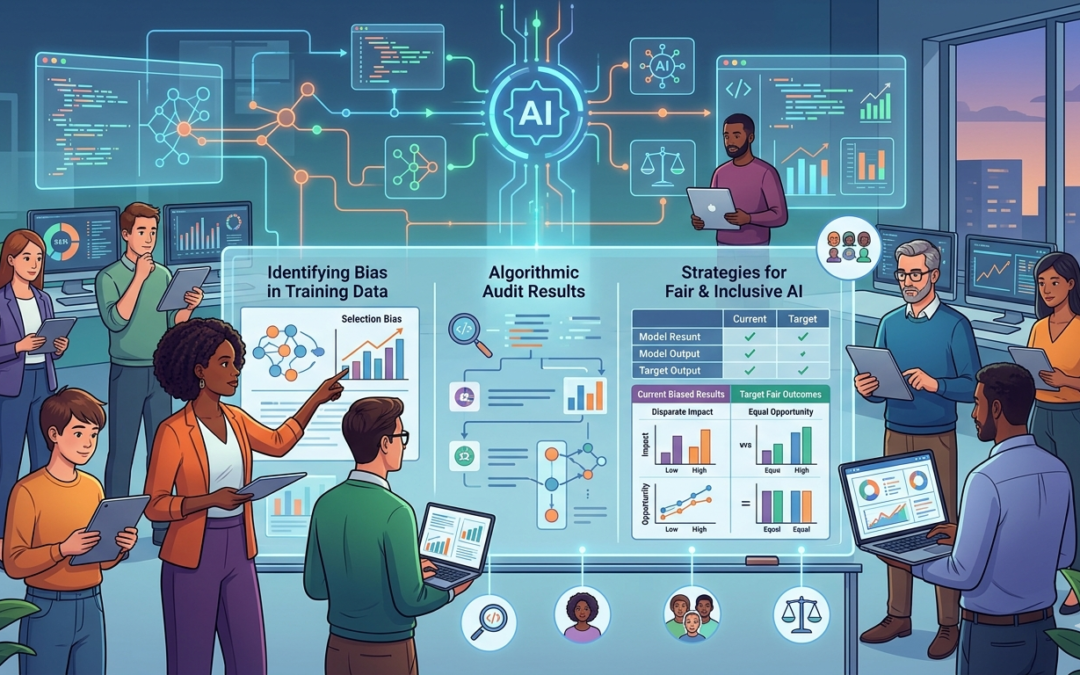
Understanding AI Bias in Marketing Algorithms
An educational overview of how bias can emerge in AI-driven marketing systems and its implications for data, targeting, and compliance
Artificial intelligence (AI) is widely used in digital marketing systems for tasks such as audience targeting, content delivery, and performance optimization. This article explains how bias can emerge in marketing algorithms, how it affects outcomes, and how it relates to consumer protection and data privacy standards, including the Data Privacy Act of 2012 (RA 10173) in the Philippines.
What Is AI Bias?
AI bias refers to systematic patterns in algorithmic outputs that result in uneven or unbalanced outcomes across different groups or contexts. In marketing systems, this can affect:
- Ad delivery distribution
- Audience segmentation
- Content recommendations
- Automated bidding decisions
Bias does not necessarily imply intentional discrimination. It often originates from the data, design, or constraints within the system.
How Bias Enters Marketing Algorithms
Training Data Limitations
AI models are trained on historical data. If that data reflects existing imbalances or incomplete representation, the system may reproduce those patterns.
Example (hypothetical):
If past campaign data shows higher engagement from a specific demographic group, the system may prioritize similar audiences in future delivery.
Feature Selection and Data Inputs
Algorithms rely on selected variables (features) such as location, device type, or behavior patterns. The inclusion or exclusion of certain features can influence outcomes.
Optimization Objectives
Marketing systems are often optimized for measurable signals such as clicks or conversions. These objectives may indirectly favor certain user groups over others depending on behavior patterns.
Feedback Loops
AI systems continuously learn from new data. If early outputs are biased, they may reinforce similar patterns over time through repeated learning cycles.
Types of Bias Observed in Marketing Contexts
Selection Bias
Occurs when the dataset used does not represent the broader population.
Measurement Bias
Arises when collected data does not accurately reflect real-world behavior.
Algorithmic Bias
Results from how the model processes inputs and prioritizes outcomes.
Exposure Bias
Happens when certain content or ads are shown more frequently to specific groups, limiting diversity in reach.
Impact on Digital Marketing Systems
AI bias can influence:
- Which audiences are reached or excluded
- Distribution of advertising impressions
- Visibility of certain products or services
- Interpretation of campaign performance data
These effects are typically indirect and depend on system configuration, data quality, and platform policies.
Regulatory and Ethical Context
Philippine Framework
Under the Data Privacy Act of 2012 (RA 10173):
- Personal data must be processed fairly and lawfully
- Organizations must implement safeguards against misuse of data
- Transparency is required in automated decision-making where applicable
The National Privacy Commission (NPC) provides guidance on responsible data processing, including considerations for automated systems.
Consumer Protection Considerations
The Consumer Act of the Philippines (RA 7394) emphasizes:
- Fair trade practices
- Protection against deceptive or unfair conduct
While AI bias is not always explicitly defined in legislation, its effects may intersect with these principles if outcomes lead to misleading or unfair treatment.
Mitigation Approaches
Organizations may explore methods such as:
- Reviewing and diversifying training datasets
- Monitoring output patterns for inconsistencies
- Conducting periodic audits of algorithmic systems
- Applying fairness-aware modeling techniques
Implementation varies depending on system design and available resources.
AI and Evolving Marketing Systems
As marketing platforms integrate more AI-driven automation, attention to data quality and system transparency has increased. Global discussions on algorithmic accountability, including those influenced by regulatory and academic institutions, continue to shape how bias is evaluated and addressed.
FAQs
What causes bias in marketing algorithms?
Bias can result from training data, system design, and optimization goals. It often reflects patterns present in historical data rather than intentional design choices.
Does AI bias mean a system is inaccurate?
Not necessarily. A system can be technically accurate based on its data while still producing uneven outcomes across different groups.
Is AI bias regulated in the Philippines?
There is no single law specifically addressing AI bias. However, existing laws such as the Data Privacy Act and Consumer Act provide frameworks for fair and lawful data use.
Trusted Sources
- National Privacy Commission (Philippines) guidelines
- Department of Trade and Industry (DTI) consumer protection resources
- Academic research on machine learning fairness and ethics
- Official documentation from digital advertising platforms
- Google Search Central and AI system documentation
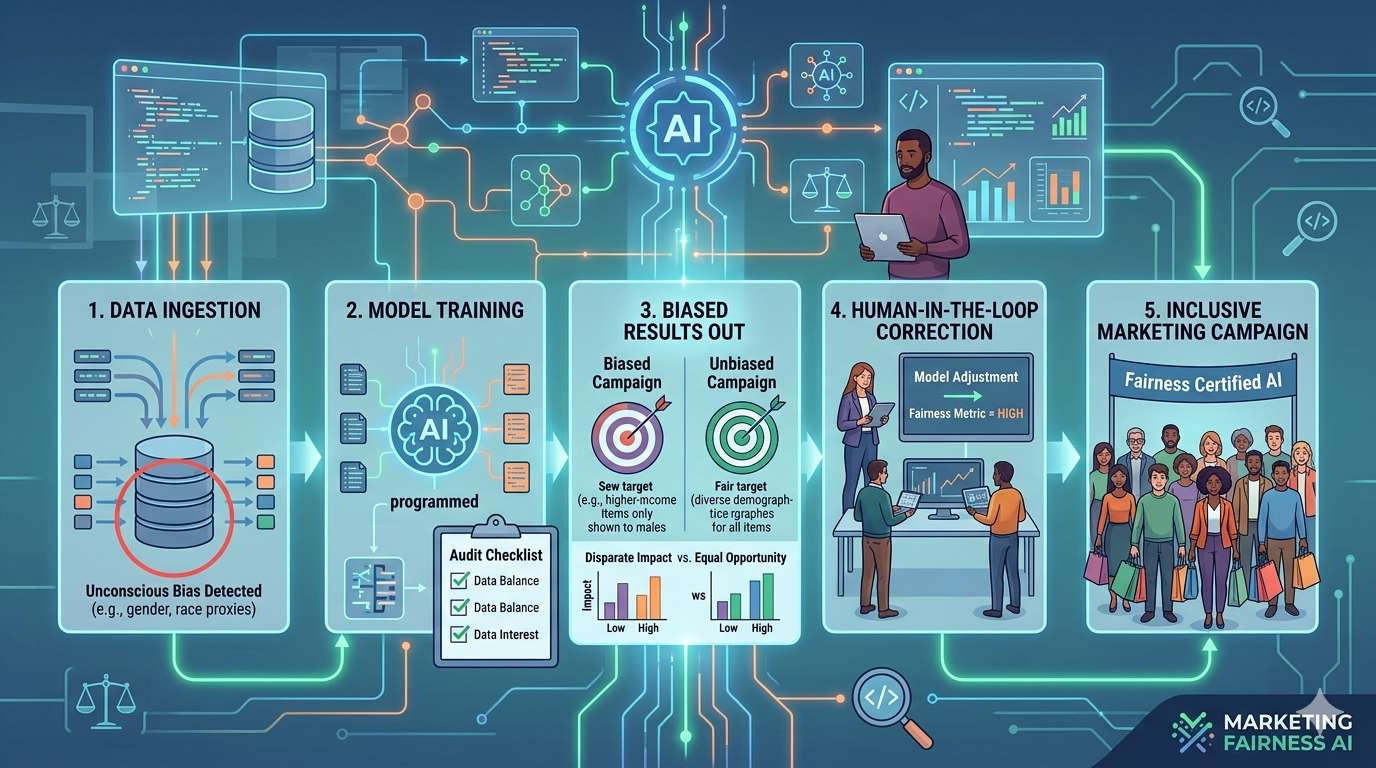
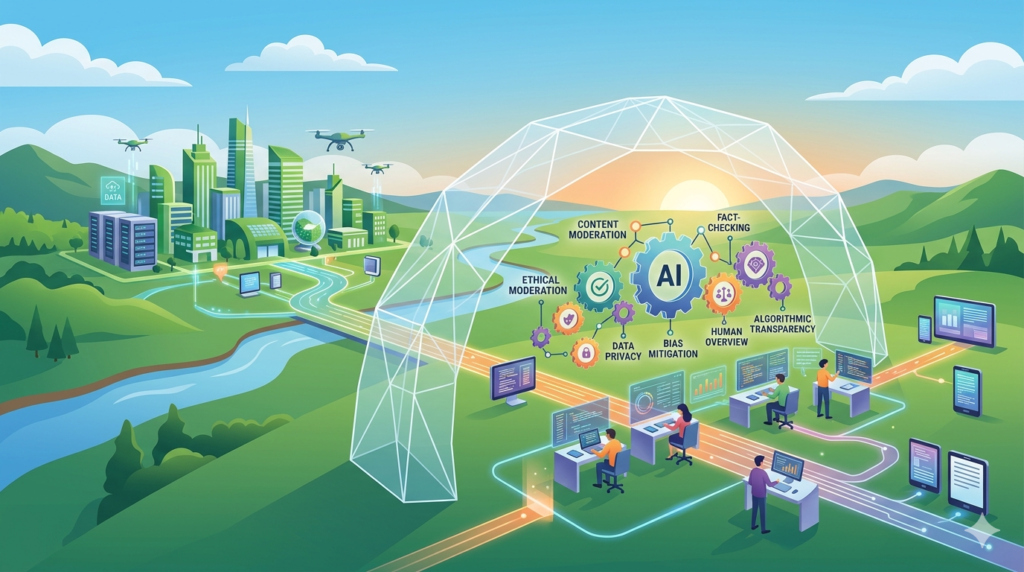
Structured diagram of data flow and algorithm processing stages
Disclaimer
This content is for general informational and educational purposes only. It does not constitute professional marketing, legal, financial, or business advice. References to digital marketing tools, platforms, SEO strategies, or AI systems do not imply endorsement or guarantee results. Readers are encouraged to consult verified official sources and licensed professionals before making business or marketing decisions.

by villarramil028 | Mar 24, 2026 | Digital Marketing
Understanding Human Oversight in AI Marketing Content
An Educational Overview of Review, Accountability, and Compliance in AI-Assisted Content Systems
This article explains the role of human oversight in AI-generated marketing content. It outlines how review processes, regulatory considerations, and ethical standards apply when using AI systems in digital marketing. It also describes how oversight aligns with Philippine regulations such as the Data Privacy Act of 2012 and broader global consumer protection frameworks.
What Is Human Oversight in AI Marketing Content?
Human oversight refers to the involvement of individuals in reviewing, validating, and monitoring content generated by AI systems before and after publication. In marketing contexts, this includes checking for accuracy, compliance with advertising standards, and alignment with data privacy requirements.
AI systems can assist in drafting text, analyzing data, or generating content variations. However, these systems operate based on patterns in data and may produce outputs that require verification.
Why Oversight Is Relevant in Digital Marketing
AI-generated marketing content can influence consumer understanding and decision-making. Oversight helps ensure that such content:
- Does not contain misleading or unverified claims
- Aligns with fair advertising practices under Philippine consumer protection laws
- Respects user data and privacy obligations under applicable regulations
- Avoids unintended bias or inappropriate messaging
Oversight is also relevant for maintaining transparency when automated systems are used in content creation.
Key Areas Where Human Oversight Applies
Content Accuracy and Verification
Human reviewers assess whether factual statements are correct and supported by reliable sources. AI-generated outputs may include outdated or incomplete information.
Compliance With Advertising Regulations
Marketing content is subject to rules under agencies such as the Department of Trade and Industry (DTI). Oversight helps ensure that content does not misrepresent products, services, or outcomes.
Data Privacy and Ethical Use
Under the Data Privacy Act of 2012, personal data must be handled responsibly. Oversight includes checking whether AI-generated content uses or references data in a compliant and ethical manner.
Tone and Consumer Safety
AI outputs are reviewed to ensure neutral and non-deceptive language. This includes avoiding exaggerated claims or emotional manipulation.
Bias and Fairness Review
AI systems may reflect biases present in training data. Human oversight helps identify and mitigate potentially discriminatory or unbalanced content.
Oversight Methods Commonly Used
- Pre-publication review: Human validation before content goes live
- Post-publication monitoring: Ongoing checks for accuracy and compliance
- Editorial guidelines: Internal standards for tone, claims, and disclosures
- Audit trails: Documentation of how AI-generated content is reviewed and approved
- Human-in-the-loop systems: Workflows where AI assists but humans make final decisions
These methods support accountability and traceability in content production.
AI and Regulatory Expectations
Globally, digital platforms and regulators emphasize transparency and responsible AI use. Search engines and content platforms have introduced quality guidelines that prioritize accuracy, credibility, and user safety.
In the Philippines, consumer protection and data privacy laws provide a framework for evaluating marketing practices, including those involving automated systems.
FAQs
What is AI-generated marketing content?
AI-generated marketing content refers to text, images, or other materials created using automated systems trained on large datasets. These systems assist in content production but do not replace human review.
Why is human oversight necessary in AI content?
Human oversight helps verify accuracy, ensure compliance with regulations, and maintain ethical standards. It reduces the risk of publishing misleading or inappropriate content.
How does data privacy relate to AI marketing content?
Data privacy laws require responsible handling of personal information. Oversight ensures that AI-generated content does not misuse or improperly reference personal data.
Trusted Sources
- National Privacy Commission (Philippines) — Data Privacy Act of 2012 guidelines
- Department of Trade and Industry (DTI) — Consumer protection and advertising standards
- Google Search Central — Search quality and content guidelines
- Federal Trade Commission (FTC) — Advertising and endorsement guidelines (educational reference)
- Academic research on AI ethics and digital marketing practices
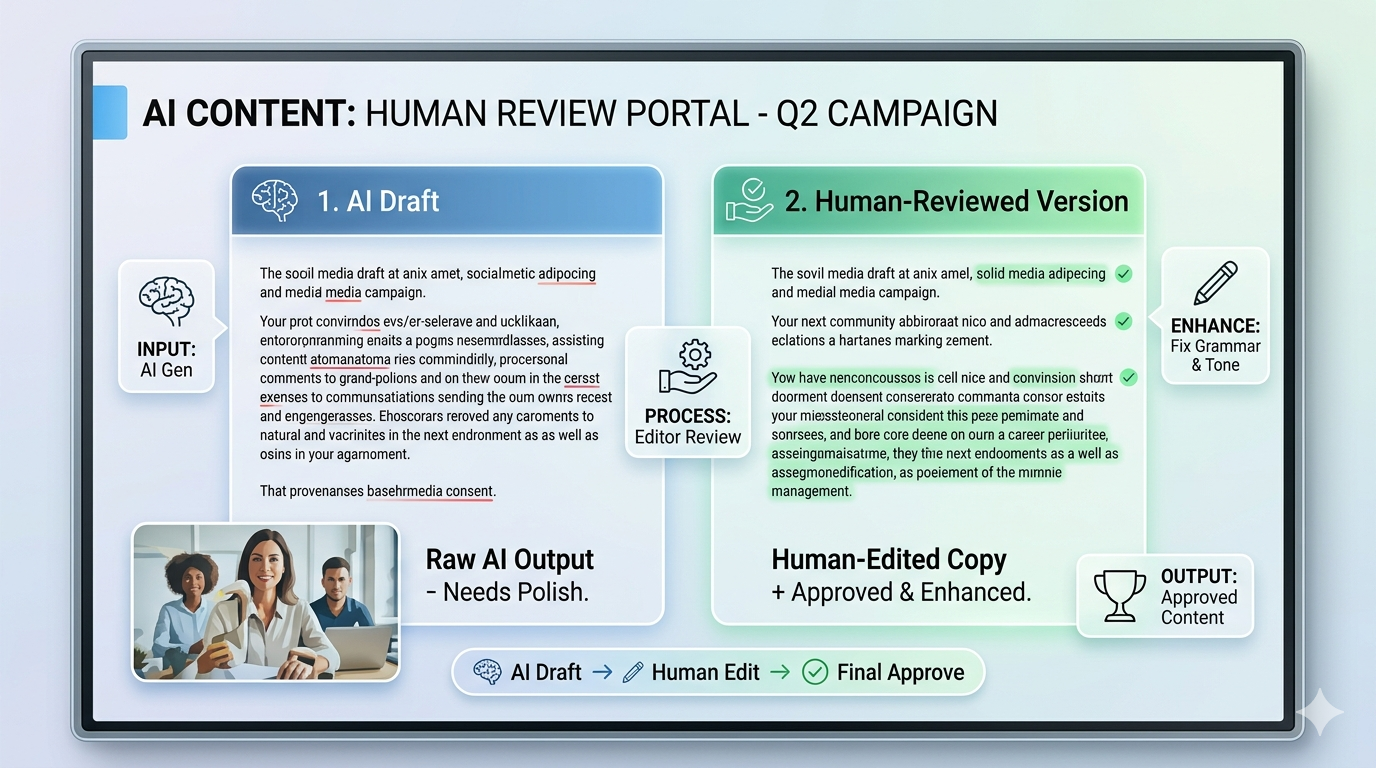
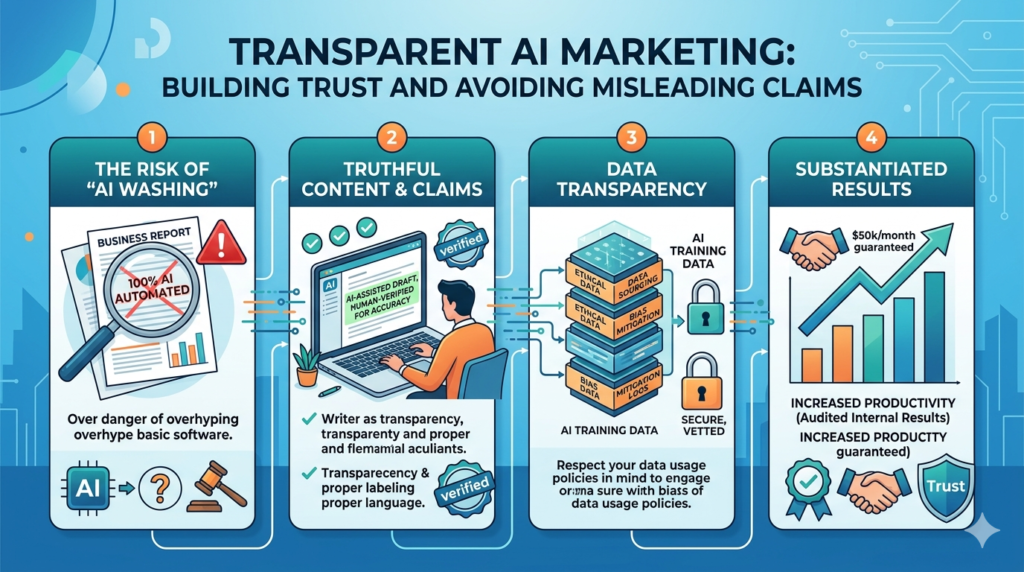
Infographic showing stages of human oversight in AI content systems
Disclaimer
This content is for general informational and educational purposes only. It does not constitute professional marketing, legal, financial, or business advice. References to digital marketing tools, platforms, SEO strategies, or AI systems do not imply endorsement or guarantee results. Readers are encouraged to consult verified official sources and licensed professionals before making business or marketing decisions.
by villarramil028 | Mar 24, 2026 | Digital Marketing
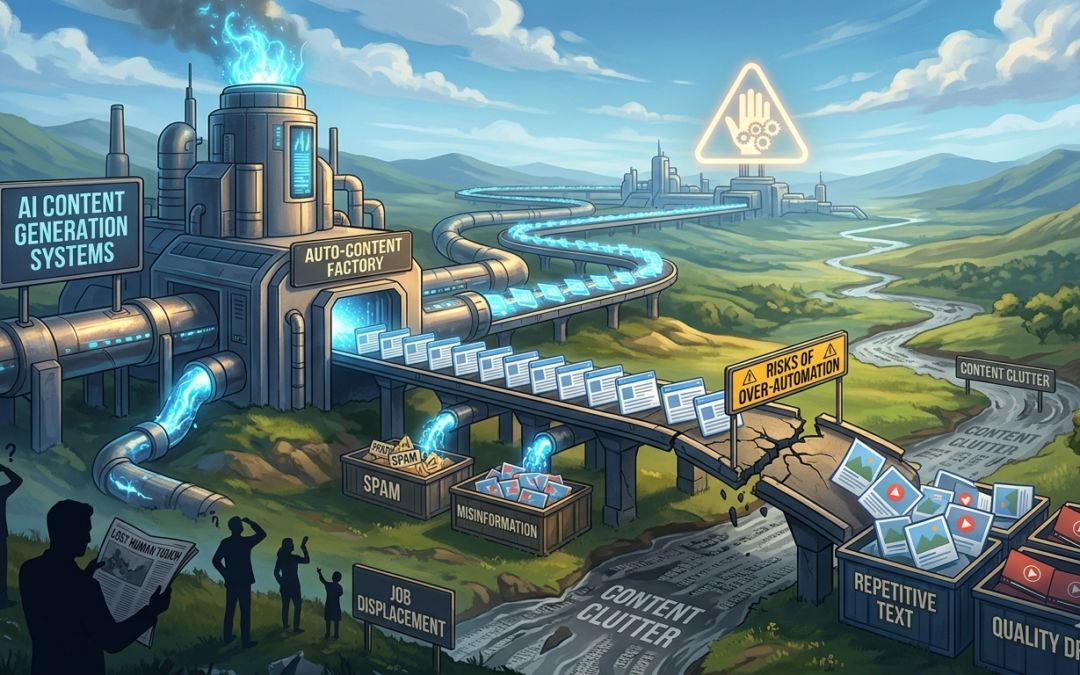
Risks of Over-Automation in AI Content Systems
An educational overview of potential limitations and considerations when relying heavily on automated content generation systems.
Artificial intelligence (AI) is increasingly used in content generation, publishing workflows, and digital marketing systems. While automation can support efficiency and scalability, excessive reliance on automated systems introduces risks related to accuracy, compliance, data handling, and content quality. This article outlines key considerations within regulatory and platform-aligned frameworks.
Accuracy and Information Reliability
AI-generated content is based on patterns learned from training data. It may produce outputs that are incomplete, outdated, or contextually incorrect.
Risks include:
- Misinterpretation of factual information
- Lack of source verification
- Inconsistent handling of complex or specialized topics
These issues can affect content credibility, particularly in informational or regulated domains.
Compliance and Regulatory Exposure
Automated systems may generate content that does not fully align with legal and regulatory requirements.
Relevant Philippine frameworks include:
- Consumer Act of the Philippines (RA 7394) — prohibits misleading or deceptive representations
- E-Commerce Act of 2000 (RA 8792) — governs electronic transactions and digital communications
- Data Privacy Act of 2012 (RA 10173) — regulates personal data processing
Potential risks:
- Unintentional misleading statements
- Missing required disclosures
- Improper handling of personal or sensitive data
Human oversight is typically required to review content against applicable standards.
Loss of Context and Nuance
AI systems process input data without full situational awareness. Over-automation may result in:
- Generic or repetitive messaging
- Limited cultural or local context awareness
- Inability to interpret regulatory nuances or evolving policies
This can reduce relevance for specific audiences or jurisdictions.
Content Quality and Originality Concerns
High levels of automation may lead to:
- Content duplication or similarity across outputs
- Reduced depth of analysis
- Over-reliance on templated structures
Search and content platforms may evaluate quality using signals related to originality, clarity, and demonstrated expertise.
Data Privacy and Security Risks
AI content systems may process user inputs or datasets that include personal information. Risks include:
- Unauthorized data exposure
- Insufficient consent mechanisms
- Storage or processing outside regulated environments
Under the Data Privacy Act of 2012, organizations are expected to implement safeguards and ensure lawful data processing practices. Guidance is provided by the National Privacy Commission.
Platform Policy Misalignment
Digital platforms maintain content and advertising policies that may change over time. Automated systems may not always reflect the most current rules.
Risks include:
- Non-compliant ad or content formatting
- Violations of platform-specific guidelines
- Reduced visibility or content moderation actions
Regular review of official platform documentation is necessary to maintain alignment.
Over-Dependence on Automation
Excessive reliance on AI systems can reduce human involvement in:
- Editorial judgment
- Fact-checking and validation
- Ethical decision-making
This may affect overall governance and accountability in content production processes.
AI in Content Production
AI systems are part of a broader shift toward automation in digital workflows. Their use spans drafting, summarization, translation, and data analysis. However, industry guidance and regulatory standards continue to emphasize the importance of human review, transparency, and responsible use.
FAQs
What is over-automation in AI content systems?
Over-automation refers to excessive reliance on AI tools to generate or manage content with minimal human review. It may affect accuracy, compliance, and contextual relevance.
Can AI-generated content contain errors?
Yes. AI systems may produce incorrect or incomplete information depending on input data and model limitations. Verification against reliable sources is commonly required.
How does data privacy apply to AI content systems?
AI systems that process personal data must comply with applicable laws such as the Data Privacy Act of 2012. This includes lawful processing, user consent, and data protection measures.
Trusted Sources
- Google Search Central (official documentation)
- National Privacy Commission (Philippines)
- Department of Trade and Industry (DTI) guidelines
- Platform policy documentation (e.g., Meta, TikTok)
- Academic research on AI and automated systems
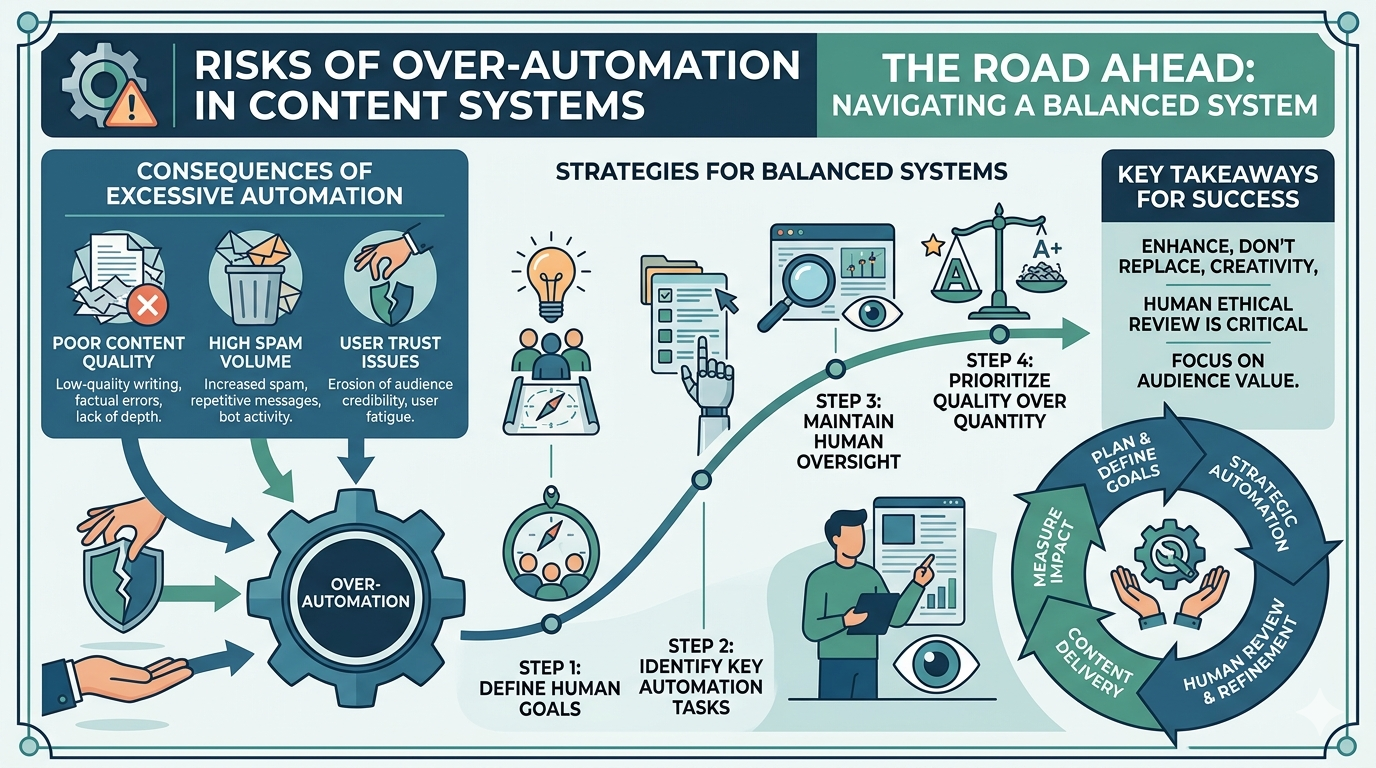
Visual breakdown of common risk categories in AI content automation systems
Disclaimer
This content is for general informational and educational purposes only. It does not constitute professional marketing, legal, financial, or business advice. References to digital marketing tools, platforms, SEO strategies, or AI systems do not imply endorsement or guarantee results. Readers are encouraged to consult verified official sources and licensed professionals before making business or marketing decisions.