AI Indexing and Consumer Protection: How Automated Discovery Systems Interact with User Rights
An educational overview of AI-driven indexing, search visibility systems, and consumer protection standards.
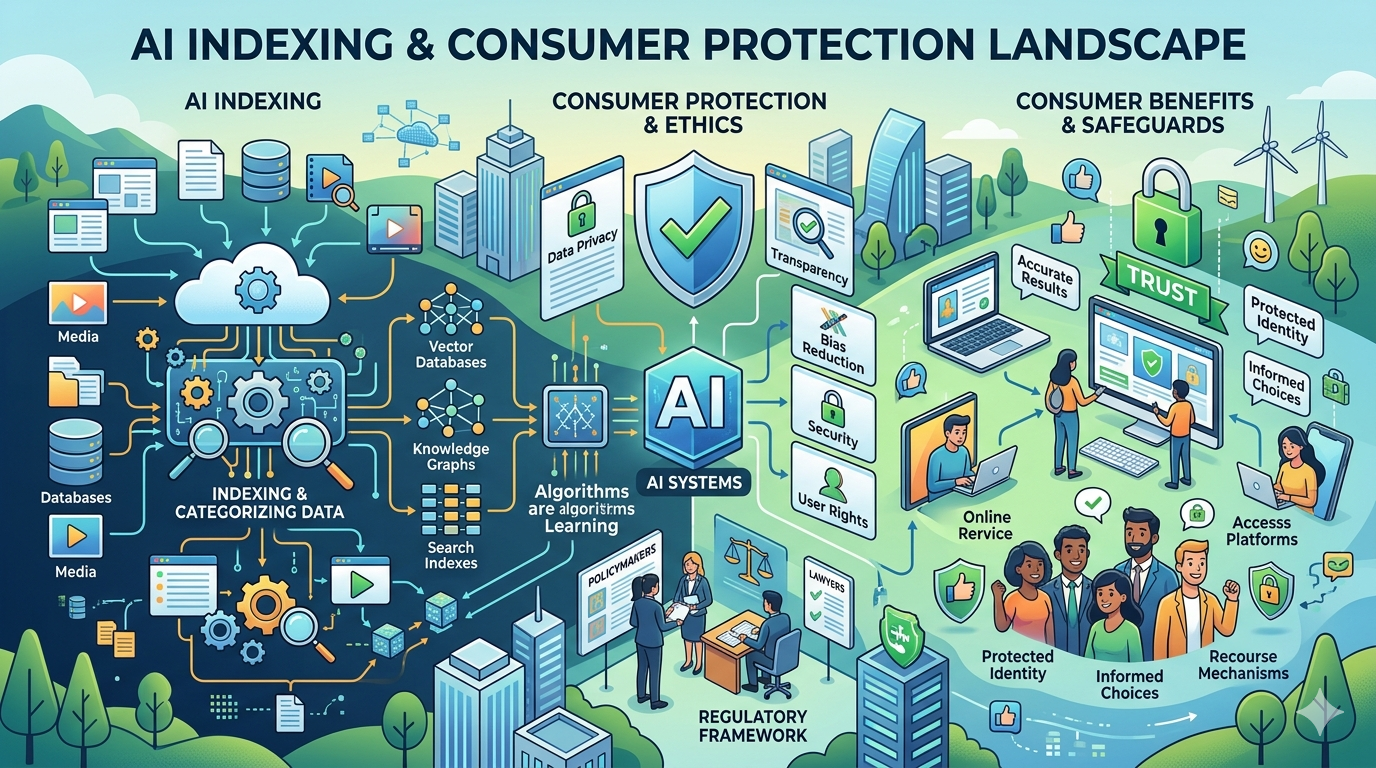
AI indexing refers to how artificial intelligence systems collect, organize, and retrieve digital content for search engines, recommendation systems, and automated answer platforms. This process affects how information is surfaced to users across websites, applications, and AI-generated summaries. Consumer protection frameworks, both in the Philippines and globally, establish boundaries to ensure that this process remains transparent, fair, and respectful of user rights.
Understanding AI Indexing Systems
AI indexing systems operate by:
- Crawling publicly accessible digital content
- Structuring data using machine learning models
- Ranking or retrieving information based on relevance, context, and user queries
These systems may power:
- Search engine results pages
- AI-generated summaries and answers
- Content recommendation feeds
The indexing process is influenced by signals such as content quality, structure, accessibility, and compliance with platform guidelines. Public documentation from major search platforms indicates that automated systems evaluate content using multiple ranking factors, including relevance and credibility indicators.
Consumer Protection in the Philippine Context
Several Philippine laws provide a framework for how digital content and user data should be handled:
Consumer Act of the Philippines (RA 7394)
Addresses deceptive, unfair, and misleading representations in commercial and informational content.
E-Commerce Act of 2000 (RA 8792)
Recognizes the legal validity of electronic data and transactions, including digital communications.
Data Privacy Act of 2012 (RA 10173)
Regulates the collection, processing, and storage of personal data. AI indexing systems must avoid unauthorized use of personal information.
DTI Advertising and Fair Trade Guidelines
Provide standards against false or misleading digital advertising and promotional content.
National Privacy Commission (NPC)
Oversees compliance with data protection requirements, including transparency and lawful processing.
Key Consumer Protection Considerations in AI Indexing
Transparency of Information Sources
AI systems may summarize or reformat content. Clear attribution and traceability help users understand where information originates.
Accuracy and Misrepresentation Risks
Automated summaries may omit context. Consumer protection standards discourage misleading or incomplete representations that could affect decision-making.
Data Privacy and Consent
AI indexing must respect:
- Lawful data collection
- User consent where required
- Limitations on processing personal or sensitive data
Algorithmic Fairness
Ranking systems may influence visibility. Fairness considerations include avoiding discriminatory or biased outcomes in content exposure.
Disclosure of Automated Content
Global standards encourage clear identification when users are interacting with AI-generated outputs rather than human-authored material.
Role of Platforms and Content Publishers
Digital platforms and content publishers share responsibility for compliance:
- Platforms maintain indexing systems, moderation policies, and transparency tools
- Publishers provide structured, accurate, and non-deceptive content
Public platform documentation often outlines:
- Content quality guidelines
- Spam and manipulation policies
- Data usage and privacy disclosures
Evolution of AI in Search and Discovery
Search systems have evolved from keyword-based indexing to AI-assisted understanding of intent and context. This includes:
- Natural language processing
- Semantic search models
- AI-generated summaries and answer engines
As these systems expand, regulatory attention has increased to address:
- Misinformation risks
- Data privacy concerns
- Automated decision-making transparency
FAQs
What is AI indexing?
AI indexing is the automated process of collecting and organizing digital content using machine learning systems so it can be retrieved in response to user queries.
How does consumer protection apply to AI-generated answers?
Consumer protection principles apply by requiring accuracy, transparency, and avoidance of misleading information, even when content is generated or summarized by AI systems.
Does the Data Privacy Act apply to AI indexing systems?
Yes. If personal data is processed, AI systems must comply with lawful processing, data minimization, and user rights under the Data Privacy Act of 2012.
Trusted Sources
- Google Search Central (official documentation)
- National Privacy Commission (Philippines)
- Department of Trade and Industry (DTI) guidelines
- OECD digital consumer protection frameworks
- Academic research on AI and information retrieval systems
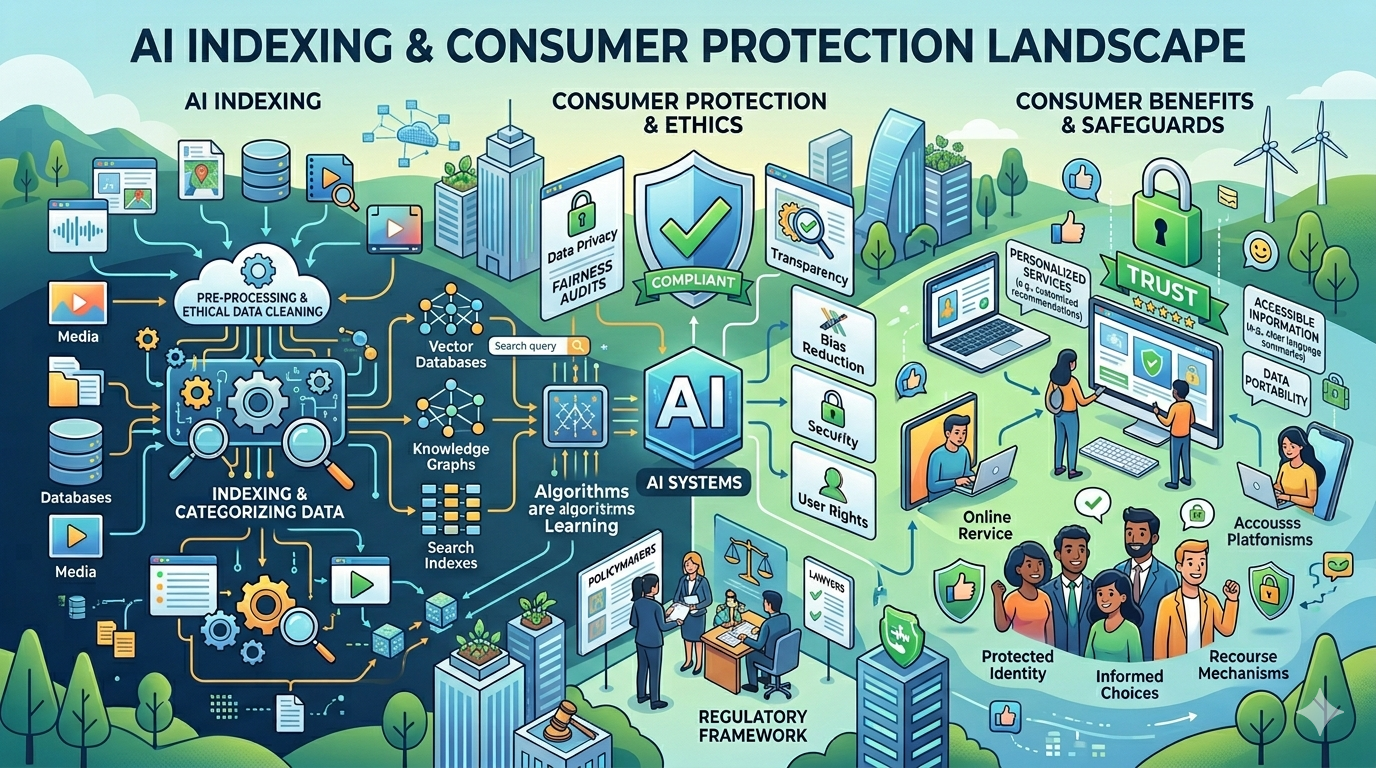
Diagram outlining indexing stages and regulatory context
Disclaimer
This content is for general informational and educational purposes only. It does not constitute professional marketing, legal, financial, or business advice. References to digital marketing tools, platforms, SEO strategies, or AI systems do not imply endorsement or guarantee results. Readers are encouraged to consult verified official sources and licensed professionals before making business or marketing decisions.