by iamrolanddiaz | Feb 20, 2026 | Principeng Hari
What Is Google Analytics 4?
Google Analytics 4 (GA4) is the current generation of analytics offered by Google. It uses an event-based tracking model to measure website and app interactions across devices.
Unlike older session-focused models, GA4 tracks user interactions as events. This approach allows businesses to analyze engagement, conversions, and user journeys in a more flexible way. Features and data availability may vary depending on configuration and regional privacy requirements.
Why GA4 Matters in 2026
In 2026, GA4 remains central to digital measurement because:
-
It supports cross-device tracking.
-
It integrates with advertising platforms such as Google Ads.
-
It is designed with privacy-aware data controls.
-
It supports machine-learning-powered insights (where available).
Analytics tools evolve over time, and platform interfaces may change. However, understanding GA4’s structure helps marketers interpret performance data responsibly and improve campaigns based on measurable insights.
How GA4 Works: The Event-Based Model Explained
GA4 tracks every interaction as an event. Examples include:
-
Page views
-
Scroll depth
-
Video plays
-
Form submissions
-
Purchases
Each event can include parameters (additional details), such as product ID, page title, or traffic source.
This model provides flexibility, but results depend on correct configuration. Proper implementation typically involves structured tagging and validation to ensure accurate reporting.
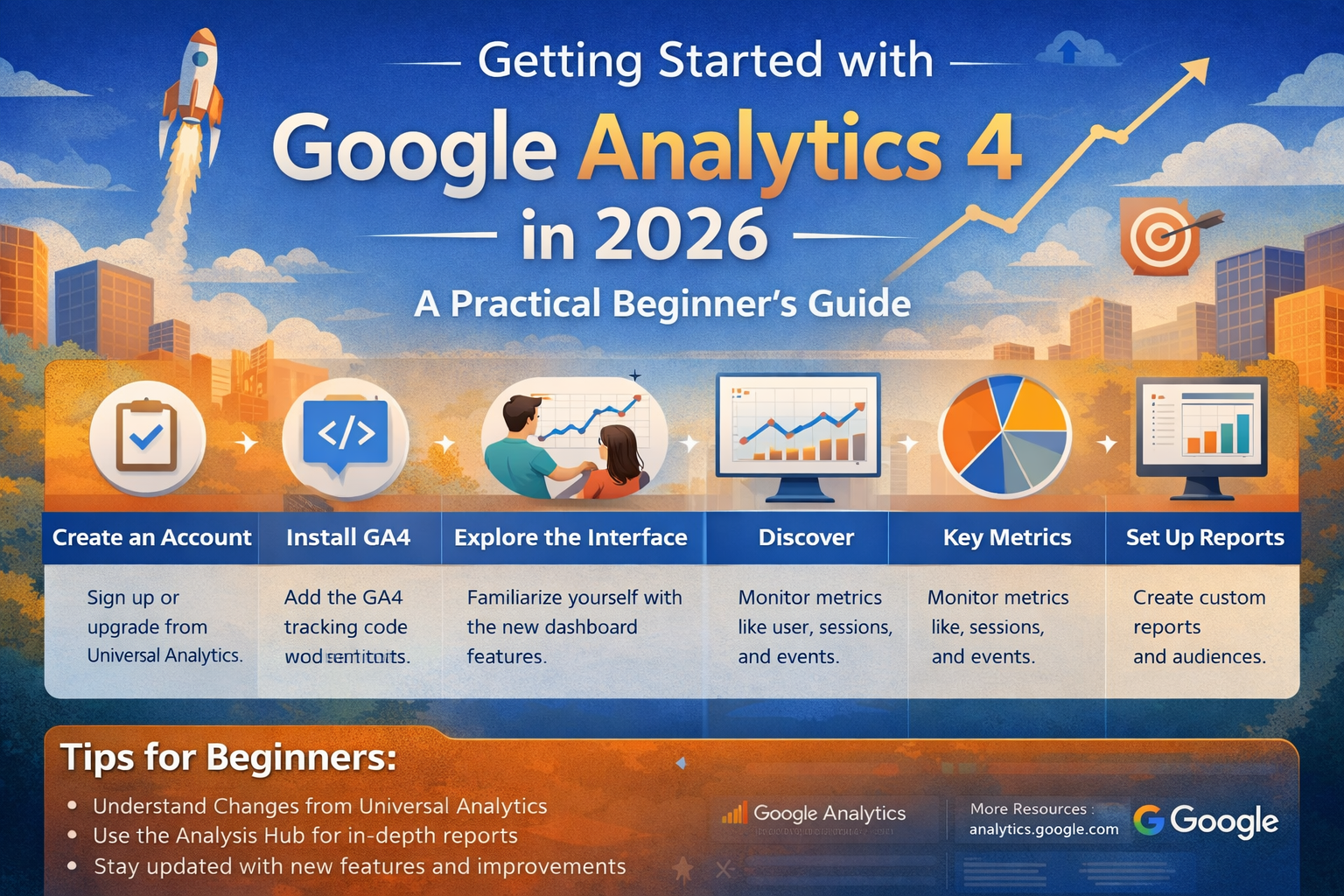
Infographic presenting structural elements commonly associated with analytics platforms.
Step-by-Step: Setting Up GA4 in 2026
1. Create a GA4 Property
Log into your Google Analytics account and create a new GA4 property.
2. Add a Data Stream
Choose your platform:
3. Install Tracking Code
You can implement tracking using:
Implementation steps may vary depending on your website platform and technical environment.
4. Configure Enhanced Measurement
GA4 allows automatic tracking for certain events such as scrolls and outbound clicks. Review settings to ensure they align with your data collection policies.
5. Define Conversions
Mark important events (e.g., purchases, lead submissions) as conversions inside the GA4 interface.
Always ensure tracking complies with applicable privacy regulations and user consent requirements in your region.
Understanding GA4 Reports
GA4 includes several core reporting sections:
-
Reports Snapshot: Overview of key metrics
-
Realtime: Current user activity
-
Acquisition: Traffic sources
-
Engagement: User interactions
-
Monetization: Revenue-related insights (if applicable)
-
Retention: Returning user behavior
Interpret metrics cautiously. Analytics data provides directional insight rather than guaranteed outcomes.
Configuring Events and Conversions
Event strategy should align with business goals. Common categories include:
-
Micro-conversions (newsletter sign-ups)
-
Macro-conversions (purchases or bookings)
-
Engagement signals (video views, downloads)
Avoid tracking unnecessary data. Collect only information that supports business analysis and respects user privacy standards.
Privacy and Data Compliance Considerations
GA4 includes configurable data retention settings and consent-related adjustments. In many regions, businesses are expected to:
-
Provide transparent privacy notices
-
Obtain user consent for certain cookies or tracking
-
Allow users to manage data preferences
Guidance may differ by jurisdiction, including frameworks inspired by GDPR-style or CCPA-style principles. Always review local regulatory requirements before deploying analytics tracking.
Common Beginner Mistakes
-
Tracking everything without a measurement plan
-
Failing to test events before launch
-
Ignoring consent management
-
Misinterpreting metrics without context
-
Not connecting GA4 to advertising platforms (if relevant)
Structured implementation often improves reporting clarity.
Practical GA4 Setup Checklist
✅ Create GA4 property
✅ Install tracking correctly
✅ Enable enhanced measurement (if appropriate)
✅ Define clear conversion events
✅ Test event firing
✅ Review privacy disclosures
✅ Document your measurement plan
FAQ
1. Is GA4 difficult to learn for beginners?
GA4 has a learning curve due to its event-based structure. With structured setup and practice, many users find it manageable over time.
2. Does GA4 automatically track conversions?
GA4 tracks events, but you must manually mark specific events as conversions.
3. Is GA4 compliant with privacy laws?
GA4 includes configurable privacy controls, but compliance depends on how it is implemented and how consent is managed in your region.
Trusted Sources / Standards
-
Google Search Central
-
Google Analytics Help Center
-
Federal Trade Commission consumer guidance
-
Regional data protection authorities (varies by jurisdiction)
Disclaimer
This content is provided for general educational purposes only. Digital marketing results vary depending on market conditions, platform rules, audience behavior, and execution.
Summary
Google Analytics 4 (GA4) is an event-based analytics platform designed to measure website and app interactions. In 2026, it supports cross-device tracking, customizable events, and privacy-aware controls. Proper setup involves creating a property, installing tracking, defining conversions, and aligning data collection with regional privacy requirements. Results depend on accurate configuration and responsible implementation.
by iamrolanddiaz | Feb 19, 2026 | Principeng Hari
What Is Google Search Console (GSC)?
Google Search Console (GSC) is a free tool from Google that helps website owners understand how their site appears in Google Search. It provides reporting and diagnostic insights such as which queries bring traffic, which pages are indexed, and whether Google encounters technical issues while crawling your website.
Unlike analytics platforms that track user behavior after visitors arrive, Search Console focuses on what happens before the click—how Google finds, understands, and ranks your content.
Why Google Search Console Matters for SEO in 2026
In 2026, SEO continues to evolve with AI-powered search experiences, rich results, and increasingly competitive content ecosystems. Google Search Console remains one of the most reliable tools for monitoring visibility because it uses data directly from Google Search systems.
Google Search Console is commonly used to:
-
monitor keyword visibility and organic clicks
-
identify technical indexing issues early
-
understand which pages Google is prioritizing
-
track performance changes after website updates
-
validate SEO improvements over time
While it does not provide every ranking factor or full keyword lists, it is still one of the strongest “source of truth” tools for organic search monitoring.
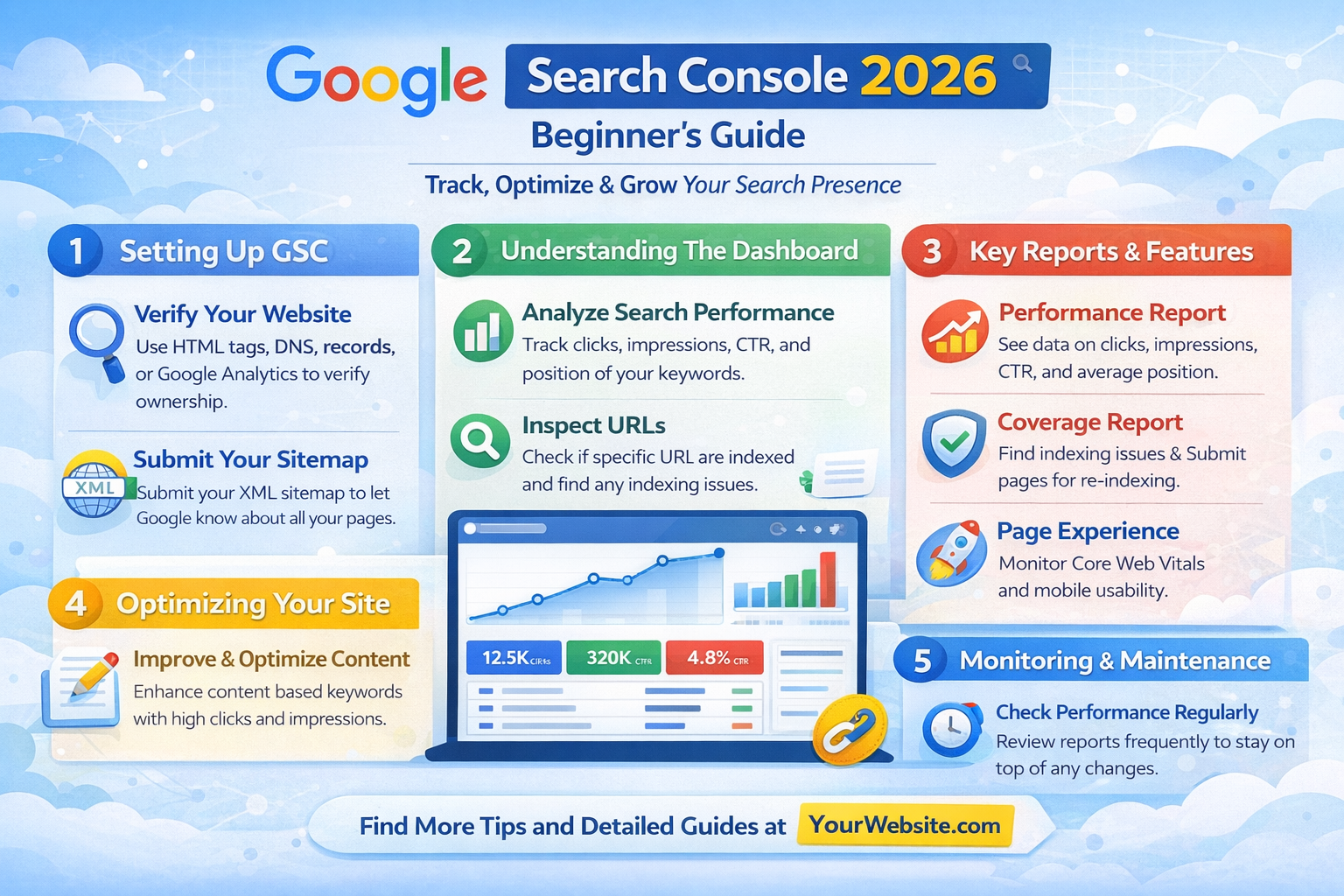
Structured visual layout presenting key interface sections and reporting categories.
How Google Search Console Works
Search Console works by connecting your website to Google’s indexing and search reporting systems.
Once verified, it can show:
-
what Googlebot crawls on your site
-
which pages are eligible to appear in search
-
search queries and page impressions
-
usability and experience signals (depending on site type)
It does not automatically improve rankings, but it can help you make better SEO decisions by showing what is working and what may need attention.
Setting Up Google Search Console (Step-by-Step)
To start using Search Console, you need to add your website as a “property” and verify ownership.
Step 1: Add a Property
Google provides two main property types:
Domain Property
-
tracks all subdomains and protocols
-
includes http, https, www, non-www
-
requires DNS verification
-
recommended for most businesses
URL Prefix Property
-
tracks only the exact URL entered
-
easier verification options
-
useful for smaller or test properties
For most beginners, Domain Property is recommended if you have access to DNS settings.
Step 2: Verify Website Ownership
Verification confirms you control the website. Common methods include:
Once verified, Google will begin collecting data. Some reports may take a few days to populate.
Understanding the Google Search Console Dashboard
After setup, you will see a dashboard with key reports. Beginners should focus on these first:
-
Performance (search traffic data)
-
Indexing / Pages (index coverage status)
-
Sitemaps (submission + crawling confirmation)
-
Experience / Enhancements (if applicable)
-
Manual Actions (penalties or compliance issues)
-
Security Issues (hacked site warnings)
Think of the dashboard as an SEO health and visibility monitor rather than a ranking “control panel.”
Performance Report Explained (Clicks, Impressions, CTR, Position)
The Performance report is one of the most useful parts of GSC. It shows how your site performs in Google Search results.
Key metrics include:
Clicks
The number of times users clicked your site from Google Search.
Impressions
How often your pages appeared in search results.
CTR (Click-Through Rate)
Clicks divided by impressions. A low CTR may suggest your title or meta description needs improvement.
Average Position
A general estimate of where your site ranks across queries. This number is best used for trend monitoring rather than exact ranking accuracy.
How to Find Keyword Opportunities
A common beginner strategy is to look for keywords with:
These keywords may represent “near-page-one” opportunities where improving content quality, headings, or snippet formatting could help visibility.
How to Compare Dates for SEO Tracking
Search Console allows you to compare time periods, which helps you evaluate:
Comparing 28 days vs previous 28 days is often a practical baseline for monitoring progress.
Indexing Report Explained (Pages, Crawling, Index Status)
The Indexing report shows which pages are indexed and which are excluded.
Common indexing statuses include:
-
Indexed (page is in Google’s index)
-
Not indexed (Google chose not to index it)
-
Excluded (blocked or intentionally not indexed)
-
Error (technical issues affecting indexing)
Indexing does not guarantee ranking, but it is a requirement for visibility in search results.
Common Indexing Issues Beginners See
Some common reasons pages may not be indexed include:
-
“Crawled – currently not indexed”
-
“Discovered – currently not indexed”
-
“Duplicate without user-selected canonical”
-
“Blocked by robots.txt”
-
“Alternate page with proper canonical tag”
-
“Soft 404”
-
“Redirect error”
These messages are not always “bad,” but they often indicate areas worth reviewing.
When “Discovered” or “Crawled” Doesn’t Mean Indexed
In many cases, Google can crawl your page but still decide not to index it. This can happen if the page is considered low-value, too similar to other pages, or lacking internal links.
Improving uniqueness, clarity, and internal linking may help in some cases, but outcomes vary depending on site quality and search competition.
How to Use the URL Inspection Tool
The URL Inspection Tool allows you to check a specific page and see what Google knows about it.
You can use it to:
-
confirm if a page is indexed
-
see the last crawl date
-
check canonical selection
-
identify crawling errors
-
request indexing (if eligible)
Request indexing is useful after publishing new content or fixing technical issues, but it does not guarantee immediate indexing.
How to Submit a Sitemap in Search Console
A sitemap helps Google discover important pages more efficiently.
Steps to submit a sitemap:
-
Go to Sitemaps in Search Console
-
Enter the sitemap URL (example: /sitemap.xml)
-
Click Submit
-
Monitor sitemap status and errors
If your sitemap is valid, Search Console will show whether Google successfully fetched it.
Submitting a sitemap is considered a best practice, especially for new websites or sites with many pages.
Enhancements Reports (Core Web Vitals, Mobile Usability, Rich Results)
Depending on your site, Search Console may show “Enhancements” such as:
Core Web Vitals
Provides performance signals based on user experience metrics. It may highlight pages with loading or stability issues.
Mobile Usability
Helps identify layout and usability problems on mobile devices, which can impact user experience.
Rich Results
Shows structured data eligibility (such as FAQ markup, product schema, or breadcrumbs). If errors exist, fixing them may improve rich snippet eligibility, depending on Google’s display rules.
These reports are most useful as diagnostic indicators rather than ranking predictors.
Manual Actions and Security Issues (What to Do If You See Warnings)
Manual Actions occur when Google applies a penalty due to violations of its spam policies. Security Issues may appear if your website is compromised.
If you see warnings:
-
review Google’s explanation inside Search Console
-
remove harmful content or spam pages
-
fix security vulnerabilities
-
request a review once resolved
It is generally recommended to address these issues quickly, as they can significantly impact visibility.
How to Use Search Console for Content Strategy
Search Console is not just a technical tool—it can also guide content planning.
Common content strategy uses include:
-
identifying blog topics based on rising impressions
-
improving older posts that rank on page 2
-
finding pages with high impressions but low clicks
-
identifying “content cannibalization” (multiple pages competing for similar queries)
A practical approach is to update content based on real query data rather than guessing what users search for.
How to Use Search Console for Technical SEO Checks
Technical SEO improvements are often easier when you have visibility into Google’s indexing signals.
Search Console can help you detect:
-
crawl errors
-
redirect problems
-
canonical misconfigurations
-
blocked pages
-
missing internal linking patterns
-
sudden drops in indexed pages
Even beginners can use these reports to start conversations with developers or hosting providers.
Common Beginner Mistakes in Google Search Console
Many users misinterpret Search Console reports. Common mistakes include:
-
assuming average position is exact ranking
-
panicking over every “excluded” URL
-
submitting the same sitemap repeatedly
-
requesting indexing too often
-
ignoring internal linking issues
-
treating Core Web Vitals as the only SEO priority
-
expecting instant traffic increases after setup
Search Console is best used as a long-term monitoring tool rather than a short-term results dashboard.
Best Practices for Using Google Search Console in 2026
If you want a stable workflow, these habits are commonly recommended:
-
check Performance trends weekly or monthly
-
submit sitemaps after major site changes
-
monitor indexing issues after publishing new content
-
review queries that trigger impressions but not clicks
-
use URL Inspection after major content updates
-
monitor manual actions and security warnings regularly
-
combine Search Console insights with analytics platforms for deeper decision-making
In many SEO workflows, Search Console is used alongside tools like GA4, tag managers, and website crawlers.
FAQ
1. Is Google Search Console free?
Yes. Google Search Console is generally available as a free tool for website owners and marketers.
2. How long does it take for Search Console data to appear?
In many cases, it may take a few days for initial performance and indexing reports to populate after verification.
3. Does submitting a sitemap guarantee indexing?
No. Submitting a sitemap helps discovery, but indexing decisions depend on many factors including content quality and site structure.
4. Can Search Console show all keywords my website ranks for?
Not always. It provides many query insights, but some queries may be omitted or grouped for privacy and reporting reasons.
5. What should I check first in Search Console as a beginner?
A practical starting point is the Performance report and Indexing report, since these directly affect search visibility and website discoverability.
Practical Checklist
Google Search Console Beginner Checklist (2026)
✅ Verify your site using Domain property if possible
✅ Submit your sitemap (sitemap.xml)
✅ Review the Performance report (queries + pages)
✅ Identify top pages by clicks and impressions
✅ Check Indexing report for excluded/error pages
✅ Use URL Inspection for newly published pages
✅ Fix robots.txt or canonical issues if needed
✅ Monitor Core Web Vitals and mobile usability reports
✅ Review security issues and manual actions monthly
✅ Use GSC insights to guide content updates
Trusted Sources / Standards
For best practices and official documentation, refer to:
-
Google Search Central documentation
-
Google Search Console Help Center
-
Google Search Spam Policies (Search Central)
-
Google Page Experience / Core Web Vitals guidance
-
FTC-style truth-in-advertising principles (for ethical marketing context)
-
Data privacy frameworks (GDPR-style and CCPA-style transparency principles)
Disclaimer
This content is provided for general educational purposes only. Digital marketing results vary depending on market conditions, platform rules, audience behavior, competition, and execution. This guide does not constitute legal or professional technical advice.
Summary
Google Search Console is a free Google tool that helps website owners monitor search performance, indexing status, and technical SEO issues. In 2026, it remains useful for tracking clicks, impressions, keyword visibility, and page indexing errors. Beginners can start by verifying their site, submitting a sitemap, reviewing performance trends, and using URL Inspection to troubleshoot indexing concerns.
by iamrolanddiaz | Feb 19, 2026 | Principeng Hari
Content Outline
- What Is GTM Consent Mode?
- Why Consent Mode Matters in 2026
- Consent Mode vs Cookie Banner: What’s the Difference?
- Consent Types Explained (ad_storage, analytics_storage, etc.)
- How GTM Consent Mode Works (Beginner Explanation)
- Step-by-Step Setup in Google Tag Manager
- Step 1 — Prepare Your Tracking Stack
- Step 2 — Configure Default Consent
- Step 3 — Set Consent Updates (After User Choice)
- Step 4 — Test Consent Mode Properly
- Recommended Default Consent Settings (Examples)
- Integrating Consent Mode with Cookie Banners (CMPs)
- Common GTM Consent Mode Mistakes to Avoid
- Best Practices for GA4 + Google Ads + Consent Mode
- Consent Mode Reporting Expectations (What Changes?)
- Practical Checklist
- FAQ
What Is GTM Consent Mode?
Google Tag Manager (GTM) Consent Mode is a privacy-focused setup that helps websites adjust how Google tags behave based on a visitor’s consent choices. Instead of firing tracking cookies immediately, GTM can send “consent signals” that indicate whether the user allowed analytics or advertising tracking.
Consent Mode is commonly used to align tracking with privacy expectations and data protection standards in many regions.
Why Consent Mode Matters in 2026
In 2026, digital marketing teams face increasing pressure to balance performance tracking with privacy compliance. Many regions have stricter expectations for how businesses handle cookies, remarketing, and behavioral tracking.
Consent Mode helps because it:
-
supports consent-based tag behavior
-
improves transparency and user trust
-
reduces risk of non-compliant tracking configurations
-
allows limited modeling signals (depending on platform behavior and setup)
This does not replace legal compliance, but it can support a more privacy-aware implementation.
Consent Mode vs Cookie Banner: What’s the Difference?
A common beginner misunderstanding is assuming Consent Mode is the same as a cookie banner.
Cookie Banner (CMP)
A cookie banner is the front-end interface that:
Consent Mode
Consent Mode is the back-end logic that:
-
tells Google tags what they are allowed to do
-
adjusts cookies and tracking behavior
-
ensures tags respond properly to consent status
In simple terms:
Cookie banners collect consent. Consent Mode enforces it inside tracking systems.
Consent Types Explained
Google Consent Mode uses multiple consent categories. The most common ones include:
| Consent Type |
What It Controls |
Typical Use |
| ad_storage |
Advertising cookies |
Google Ads remarketing |
| analytics_storage |
Analytics cookies |
GA4 session tracking |
| ad_user_data |
Ad-related user data |
Enhanced conversions logic |
| ad_personalization |
Personalization signals |
remarketing customization |
| functionality_storage |
site functionality cookies |
language preferences |
| security_storage |
security cookies |
fraud prevention |
Not all websites need every consent type. Many beginner setups focus on analytics_storage and ad_storage first.
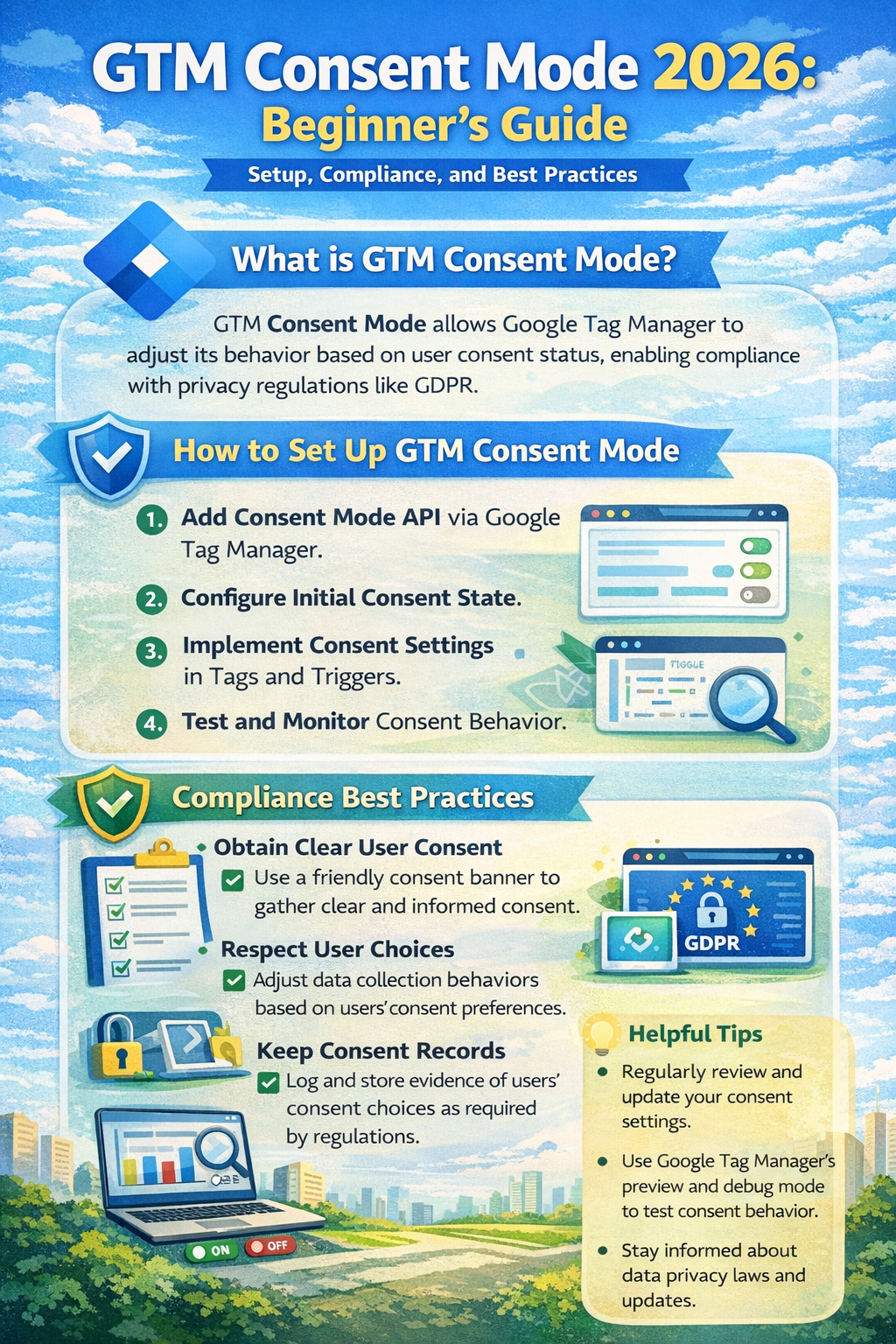
Structured visual summary of GTM Consent Mode 2026 configuration layers and consent state framework.
How GTM Consent Mode Works
Consent Mode works by setting rules such as:
-
If user consent is denied, tags may still load but behave in a limited way.
-
If user consent is granted, tags can store cookies and track normally.
In practice, this means:
This approach is often used to avoid firing full tracking cookies before consent is captured.
Step-by-Step Setup in Google Tag Manager
Step 1 — Prepare Your Tracking Stack
Before setting up Consent Mode, confirm:
-
your GTM container is installed correctly
-
GA4 configuration tag (or GA4 event tags) are present
-
Google Ads conversion tags are properly configured
-
you have a cookie banner or CMP available
Even a simple cookie banner can work if it can trigger consent updates.
Step 2 — Configure Default Consent in GTM
Default consent defines what happens before the user makes a choice.
Recommended beginner approach:
In GTM:
- Go to Tags
- Create a new tag
- Select Consent Initialization – Google Tag
- Configure default consent states
Example default settings:
This ensures tracking cookies are not stored before permission is granted.
Step 3 — Set Consent Updates After User Choice
Once the user accepts or rejects cookies, your cookie banner should trigger an event.
In GTM, create a tag that runs on the consent action event:
-
“Accept All Cookies”
-
“Accept Analytics”
-
“Reject All”
-
“Save Preferences”
Then use the Consent Update command to set values like:
If a user rejects ads but accepts analytics:
This gives more granular control and is considered a best practice in many compliance-focused setups.
Step 4 — Test Consent Mode Properly
Testing is essential because many consent setups appear correct but still fire cookies too early.
Recommended testing methods:
What to verify:
-
cookies do not appear before consent
-
tags behave differently depending on consent
-
consent update triggers are firing correctly
Recommended Default Consent Settings
Privacy-First Default (Recommended for many regions)
Analytics-Friendly Default (More aggressive, not always recommended)
This approach may not be appropriate in many jurisdictions unless analytics cookies are considered essential, which is not always the case.
Integrating Consent Mode with Cookie Banners
A Consent Management Platform (CMP) is usually the easiest way to implement Consent Mode correctly.
A CMP typically provides:
-
built-in cookie scanning
-
preference center UI
-
consent logs
-
triggers for GTM
Common integration flow:
- User lands on site
- Default consent = denied
- CMP banner displays
- User selects preferences
- CMP pushes consent status into GTM
- GTM updates consent mode states
- GA4 and Ads tags adjust accordingly
When using a CMP, confirm it supports:
Common GTM Consent Mode Mistakes to Avoid
❌ Setting consent tags to fire too late
Consent initialization must run early. Otherwise cookies may fire before consent.
❌ Forgetting to update consent after user action
If you set default denied but never update, you may lose analytics visibility entirely.
❌ Allowing tags to fire without consent checks
Some tags (especially custom HTML tags) can bypass consent controls unless configured properly.
❌ Not documenting consent categories
You should clearly map cookie categories to:
-
analytics
-
ads
-
functionality
This improves transparency and makes audits easier.
❌ Assuming Consent Mode is “legal compliance”
Consent Mode is a technical solution, not a legal certification.
Best Practices for GA4 + Google Ads + Consent Mode
Best practice checklist:
-
Implement default denied for analytics and ads unless justified
-
Use granular consent options (not only “accept all”)
-
Separate GA4 events from conversion tags for better control
-
Use server-side tagging carefully (still requires consent logic)
-
Maintain clear cookie and privacy policies
For Google Ads:
Consent Mode Reporting Expectations
Consent Mode may affect reporting and attribution because fewer cookies are stored when users deny consent.
In many setups, you may observe:
-
reduced remarketing audience size
-
fewer attributed conversions
-
more reliance on modeled data (depending on platform behavior)
However, Consent Mode can still support measurement continuity in a more privacy-respecting way.
Actual reporting outcomes vary based on:
-
traffic volume
-
consent rate
-
regional rules
-
tag setup quality
Practical Checklist
✅ GTM installed correctly
✅ GA4 tag configured
✅ Google Ads conversion tag configured (if needed)
✅ Consent Initialization tag created
✅ Default consent states set to denied
✅ Cookie banner connected to GTM
✅ Consent update triggers created
✅ Consent categories mapped properly
✅ Testing done in Preview + browser cookies
✅ Privacy policy and cookie notice updated
✅ Documentation saved for audit readiness
FAQ
What is the difference between Consent Mode v2 and older Consent Mode?
Consent Mode v2 expands consent signals and aligns better with modern advertising privacy requirements, especially for Google Ads-related data signals.
Do I still need a cookie banner if I use GTM Consent Mode?
Yes. Consent Mode controls tag behavior, but a cookie banner or CMP is typically required to collect user preferences.
Will Consent Mode reduce my GA4 traffic?
It may reduce tracked sessions and events if users deny analytics consent. Reporting impact depends on consent rates and implementation.
Is GTM Consent Mode required for all websites?
Not always, but it is widely recommended for websites using Google tags in regions where consent-based tracking is expected.
Can I use Consent Mode with non-Google tags?
Yes, but you may need additional GTM consent checks and tag-level controls to prevent third-party cookies from firing without consent.
Trusted Sources / Standards
-
Google Tag Manager Documentation (Consent Mode and consent settings)
-
Google Analytics (GA4) Documentation
-
Google Ads Help Center (conversion tracking policies)
-
GDPR-style transparency and consent principles (general reference)
-
Data privacy best practices aligned with global consumer protection expectations
Disclaimer
This content is provided for general educational purposes only. Digital marketing results vary depending on market conditions, platform rules, audience behavior, and execution. Consent requirements may differ by jurisdiction, so businesses should review applicable privacy laws and platform policies.
Summary
GTM Consent Mode in 2026 helps websites adjust Google tag behavior based on user consent preferences. It works alongside a cookie banner by setting default consent states and updating them after a visitor accepts or rejects tracking. A proper setup improves privacy alignment, reduces compliance risk, and supports more responsible analytics and advertising measurement depending on platform capabilities.
by iamrolanddiaz | Feb 19, 2026 | Principeng Hari
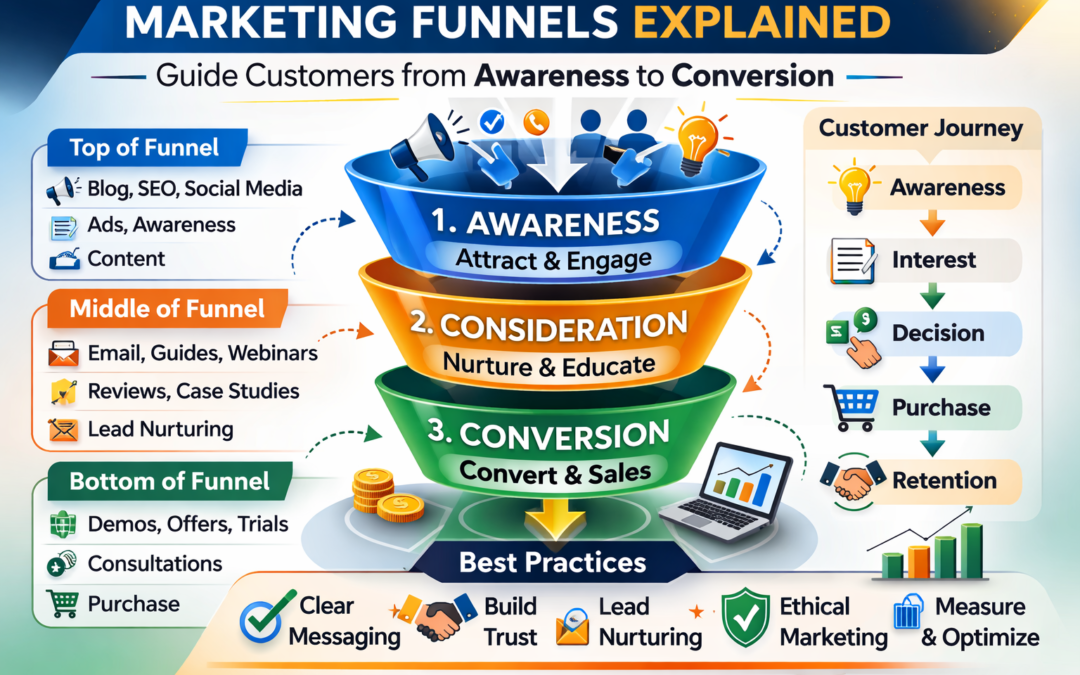
A marketing funnel is a framework used to illustrate the stages a potential customer passes through before making a purchase or completing a desired action. Funnels help marketers understand audience behavior, tailor messaging, and provide value at each stage of the customer journey.
The Stages of a Marketing Funnel
Top of Funnel (Awareness)
At this stage, the goal is to make your audience aware of your brand or product. Common strategies include content marketing, social media engagement, and search engine optimization. This stage focuses on education and information rather than direct selling.
Middle of Funnel (Consideration)
Potential customers are now evaluating options. Marketers can provide detailed guides, case studies, email newsletters, and webinars to help prospects understand solutions available. Nurturing trust and credibility is key.
Bottom of Funnel (Conversion)
This stage focuses on converting interested leads into customers. Tactics may include product demos, free trials, consultations, or comparison tools. Ethical funnel design ensures transparency, avoids pressure tactics, and clearly communicates value and costs.
How Marketing Funnels Help Businesses
-
Organize marketing activities according to the buyer’s journey.
-
Identify content and messaging gaps.
-
Measure engagement and optimize campaigns responsibly.
-
Improve lead nurturing without resorting to manipulative tactics.
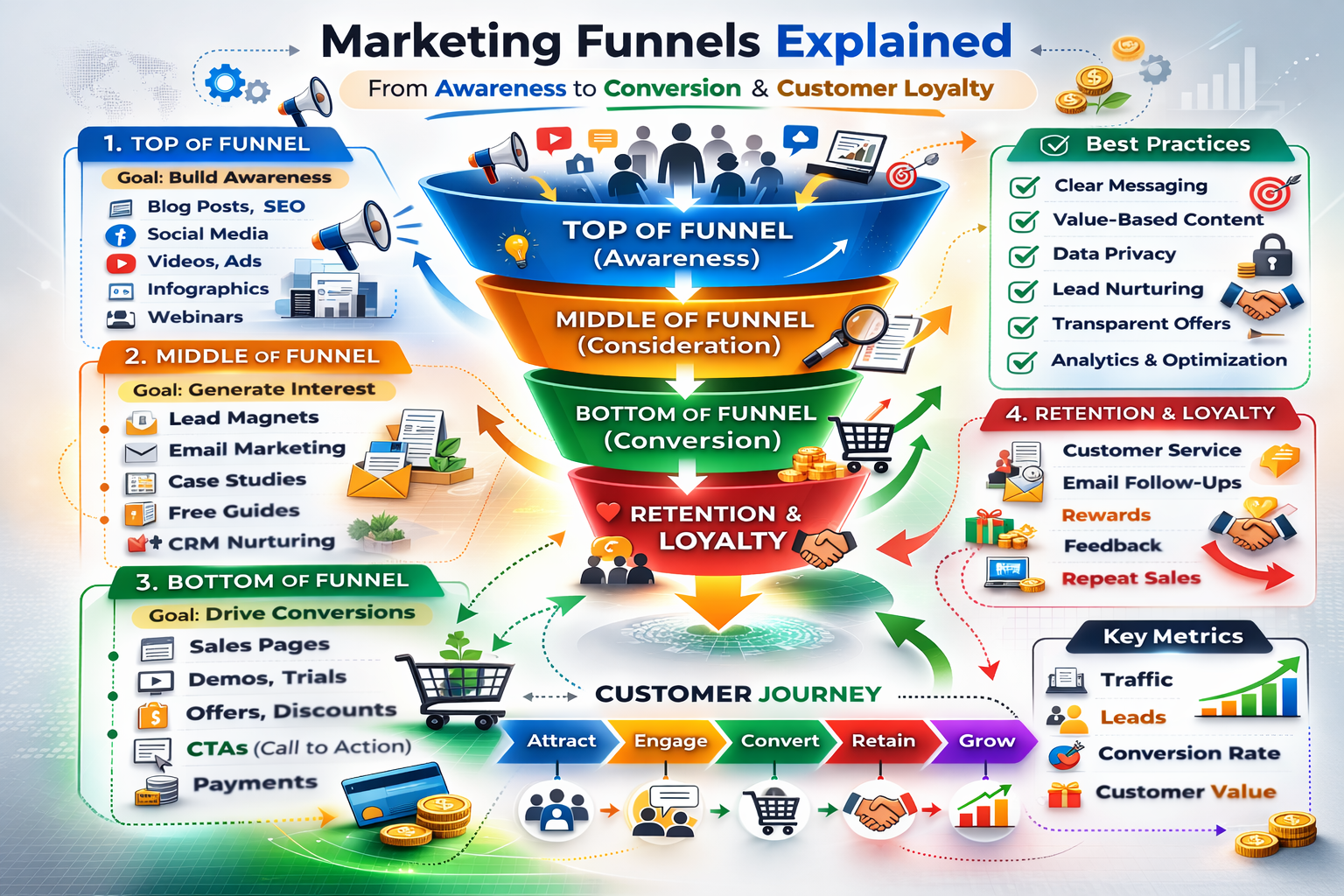
Infographic depicting stages of marketing funnels and key engagement points globally.
Best Practices for Ethical Funnel Management
-
Provide clear information and disclosures.
-
Avoid misleading claims about outcomes or performance.
-
Respect data privacy and consent regulations.
-
Align messaging with audience needs and expectations.
Common Funnel Mistakes to Avoid
-
Using clickbait or fake urgency.
-
Ignoring customer feedback and engagement data.
-
Skipping nurture stages and pushing for early conversions.
-
Collecting personal data without proper disclosure.
Checklist: Building a Simple Marketing Funnel
FAQ
Q1: Can a funnel work for small businesses?
A1: Yes, marketing funnels can be adapted to businesses of any size, depending on resources and audience needs.
Q2: Do all leads go through the same funnel?
A2: No, funnels may vary depending on product, audience segment, and customer behavior.
Q3: How do I measure funnel success?
A3: Metrics can include engagement rates, lead quality, conversion rates, and customer retention while respecting privacy regulations.
Trusted Sources / Standards
Disclaimer
“This content is provided for general educational purposes only. Digital marketing results vary depending on market conditions, platform rules, audience behavior, and execution.”
Summary
Marketing funnels outline the journey potential customers take from awareness to purchase. By mapping top, middle, and bottom funnel stages, businesses can deliver relevant content, nurture leads, and guide conversions responsibly. Ethical funnel management ensures transparency, data privacy, and audience trust while helping marketers optimize campaigns in many regions without using manipulative tactics.
by iamrolanddiaz | Feb 16, 2026 | Principeng Hari
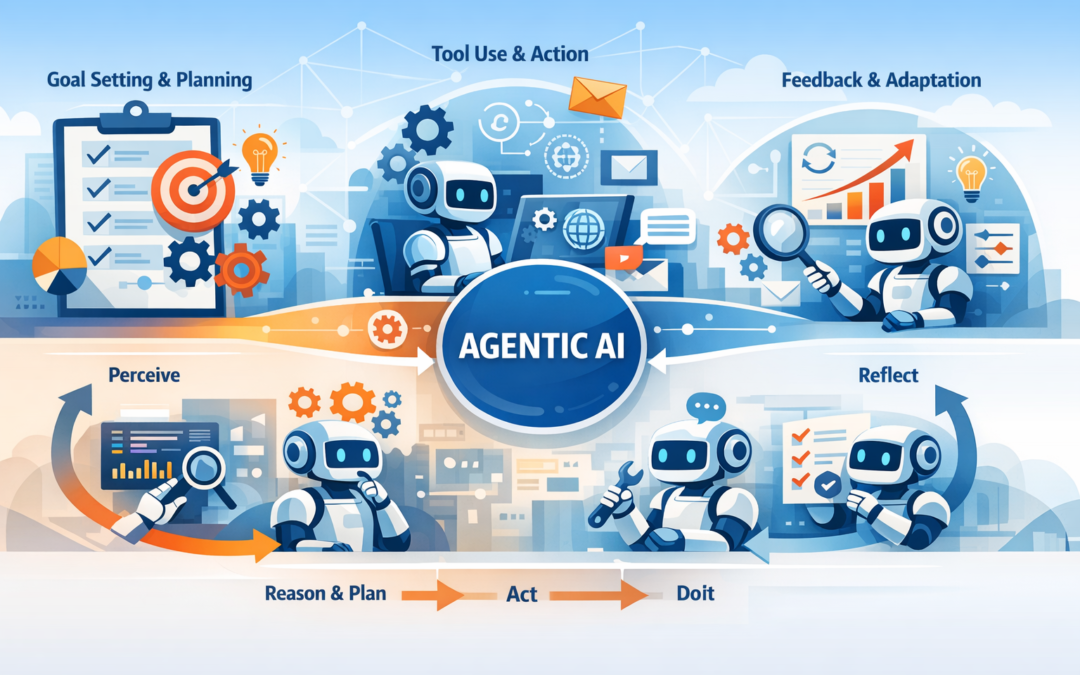
Agentic AI is a type of artificial intelligence designed to act with autonomy — meaning it can plan, make decisions, and carry out multi-step tasks with limited human supervision rather than just responding to single prompts.
Think of it as the shift from:
- Traditional AI: “Tell me what to do.”
- Generative AI: “Create something based on my request.”
- Agentic AI: “Here’s the goal — figure out the steps and execute them.”
🧠 Simple definition
Agentic AI refers to AI systems made up of AI agents that can:
- reason about goals
- plan workflows
- use tools or external systems
- take actions automatically
- adapt based on feedback or changing conditions
This moves AI from just generating answers to performing tasks.
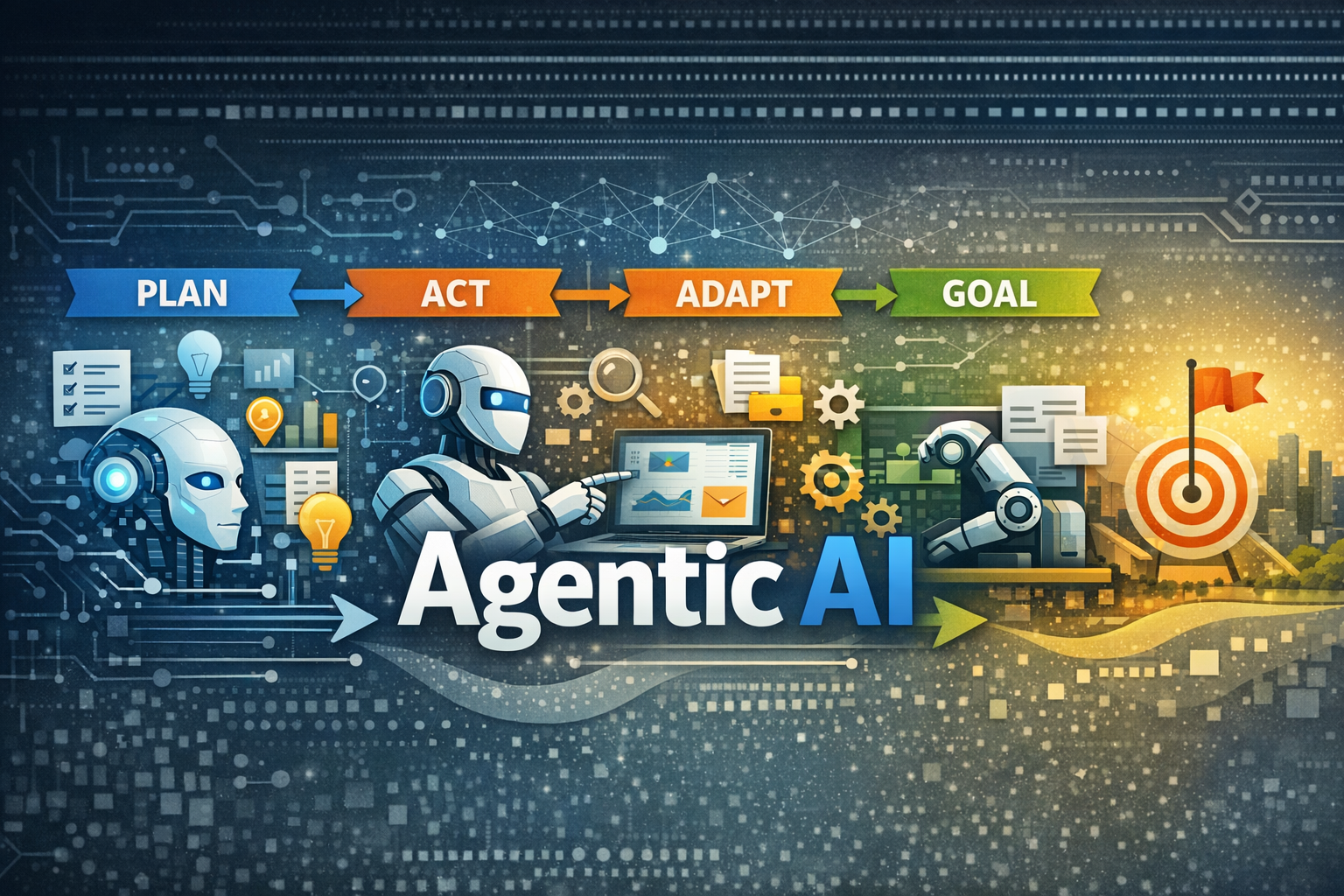
Visual layout presenting key concepts related to Agentic AI.
⚙️ Core characteristics of agentic AI
Most definitions highlight these features:
1️⃣ Autonomy
The system can operate without constant human input, handling tasks end-to-end once given a goal.
2️⃣ Planning & reasoning
Instead of a single response, it breaks problems into steps and decides how to proceed.
3️⃣ Tool use
Agentic systems can interact with APIs, databases, software, or other tools to gather information or take actions.
4️⃣ Adaptability
Agents can learn from feedback and adjust strategies over time.
5️⃣ Goal-driven behavior
The AI focuses on achieving outcomes rather than only generating text.
🆚 Agentic AI vs. regular AI
| Type |
How it works |
Example |
| Traditional automation |
Fixed rules |
Auto-reply email |
| Generative AI |
|
|
| Agentic AI |
Plans + acts |
Books meetings, gathers data, updates records automatically |
🧩 Real-world examples
- A customer support agent that checks account data, follows workflows, and completes actions instead of only answering questions.
- Systems coordinating multiple specialized agents to complete larger tasks together.
- Enterprise tools that monitor systems and take predefined actions with oversight.
🏗️ How agentic AI usually works
- Perceive → gather data
- Reason → analyze and plan
- Act → use tools or perform actions
- Reflect → evaluate results and adjust
This repeated cycle allows longer workflows than simple prompt-response systems.
⚠️ Why people are talking about it now
Experts see agentic AI as the next step after generative AI because it moves AI:
- from knowledge → to action
- from answering → to executing workflows
At the same time, it introduces new challenges around safety, governance, and oversight because autonomous systems can make decisions independently.
🧠 One-sentence explanation
Agentic AI = AI that can set plans and take actions toward goals, not just generate responses.
Agentic AI FAQ
Q1: What is Agentic AI?
A: Agentic AI is a type of artificial intelligence designed to act autonomously. It can plan, make decisions, and complete multi-step tasks with minimal human supervision, going beyond traditional or generative AI that only responds to prompts.
Q2: How is Agentic AI different from regular AI?
A: Unlike traditional AI, which follows fixed rules, or generative AI, which creates content based on instructions, Agentic AI plans workflows, uses tools, and executes actions automatically to achieve goals.
Q3: What are the main features of Agentic AI?
A: Core features include:
- Autonomy – Operates without constant human input.
- Planning & reasoning – Breaks tasks into steps and decides the next actions.
- Tool use – Interacts with software, APIs, and databases.
- Adaptability – Learns from feedback and adjusts strategies.
- Goal-driven behavior – Focuses on completing outcomes, not just generating text.
Q4: Can you give examples of Agentic AI in the real world?
A: Examples include:
- Customer support agents that gather account data and complete workflows automatically.
- Systems coordinating multiple AI agents for complex tasks.
- Enterprise monitoring tools that detect issues and act on them autonomously.
Q5: How does Agentic AI work?
A: Agentic AI works in cycles:
- Perceive – Gather relevant data.
- Reason – Analyze information and plan next steps.
- Act – Execute tasks using tools or systems.
- Reflect – Evaluate outcomes and improve future actions.
Q6: Why is Agentic AI gaining attention now?
A: Experts view it as the next evolution after generative AI, shifting AI from knowledge and responses to independent action. It promises higher efficiency but also raises questions about safety, oversight, and governance.
Q7: Do I need technical skills to use Agentic AI?
A: While understanding workflows and AI concepts helps, many Agentic AI tools are designed to be user-friendly, enabling businesses to automate tasks without deep technical knowledge.
Q8: What are the benefits of using Agentic AI?
A: Benefits include:
- Automating repetitive or complex tasks.
- Improving efficiency and decision-making.
- Reducing reliance on human supervision for multi-step workflows.
- Enabling AI-driven goal completion rather than just information retrieval.
Q9: Is Agentic AI safe to use?
A: Safety depends on proper oversight, governance, and ethical implementation. Autonomous AI can make independent decisions, so monitoring and clear policies are essential.
Q10: Can Agentic AI replace human jobs?
A: Agentic AI is designed to assist and automate tasks rather than fully replace humans. It works best when augmenting human roles, improving efficiency, and handling repetitive or structured workflows.
by iamrolanddiaz | Feb 16, 2026 | Principeng Hari
Content Outline
- Why Understanding the Difference Matters
- What is Marketing?
- What is Growth?
- What is Brand?
- Comparing Marketing, Growth, and Brand
- How Businesses Use Each Strategically
- Key Takeaways
- Practical Checklist
- FAQ
Why Understanding the Difference Matters
In today’s competitive business landscape, terms like marketing, growth, and brand are often used interchangeably. However, each serves a unique role in shaping a company’s strategy. Understanding these differences helps leaders make informed decisions, allocate resources effectively, and communicate with stakeholders clearly.
This article provides an educational overview that is globally compliant, ethically framed, and safe for digital platforms.
What is Marketing?
Marketing is the practice of communicating a business’s products or services to an audience to create awareness, interest, and engagement. It encompasses activities such as:
-
Content creation (blogs, social media posts, videos)
-
Advertising campaigns (paid and organic)
-
Search engine optimization (SEO)
-
Customer research and insights
Marketing focuses on strategic communication and value delivery rather than instant results. It is foundational for attracting attention and maintaining relevance in a crowded market.
What is Growth?
Growth refers to the strategies and tactics aimed at scaling a business, increasing customer acquisition, revenue, or market share. Growth strategies often combine marketing efforts with product improvements, sales optimization, and user experience enhancements.
Key elements include:
-
Conversion rate optimization
-
Retention programs and loyalty initiatives
-
Experimentation and analytics-based decision-making
-
Cross-channel campaigns aligned with performance metrics
While marketing creates awareness, growth emphasizes measurable expansion and often relies on iterative testing to find what works.
What is Brand?
Brand represents the perception, reputation, and identity of a company or product in the minds of customers. Strong brands convey trust, credibility, and consistency. Branding includes:
-
Visual identity (logos, color palette, typography)
-
Messaging tone and voice
-
Mission, values, and storytelling
-
Customer experience and service standards
Branding is less about immediate conversions and more about long-term relationships and loyalty. It provides a framework that marketing and growth strategies operate within.
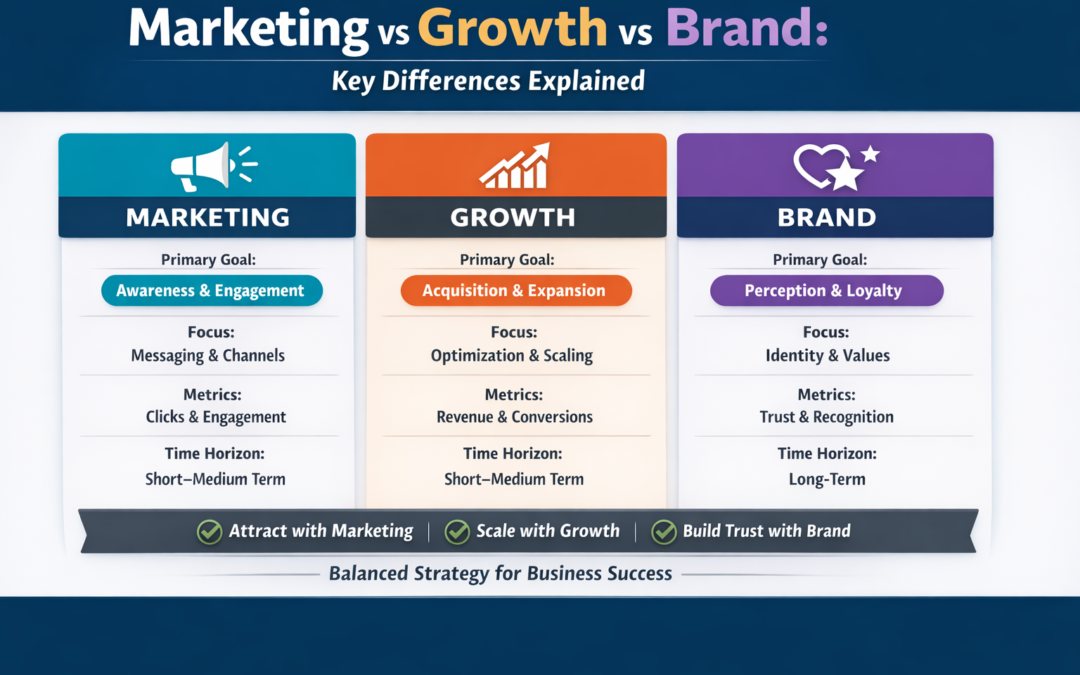
Comparing Marketing, Growth, and Brand
| Aspect |
Marketing |
Growth |
Brand |
| Primary Goal |
Awareness & engagement |
Acquisition & expansion |
Perception & loyalty |
| Time Horizon |
Short–medium |
Short–medium |
Long-term |
| Metrics |
Clicks, impressions, engagement |
Conversion rates, revenue growth |
Brand recall, NPS, trust |
| Focus |
Messaging & channels |
Experiments & optimization |
Identity & values |
Understanding these distinctions allows businesses to align marketing campaigns, growth initiatives, and brand development for maximum strategic impact.
How Businesses Use Each Strategically
- Marketing campaigns are often used to attract attention and educate potential customers.
- Growth strategies focus on testing channels, optimizing funnels, and scaling successful tactics.
- Brand initiatives ensure consistent messaging, build trust, and support long-term retention.
A balanced approach integrates all three, ensuring that short-term growth does not compromise brand integrity, and marketing activities are guided by a cohesive identity.
Key Takeaways
-
Marketing = Communication & awareness
-
Growth = Expansion & measurable results
-
Brand = Perception & long-term trust
-
All three should work together in a compliant, ethical, and strategic manner
Practical Checklist
-
Define your marketing objectives clearly
-
Identify growth metrics for experimentation
-
Audit brand messaging and visual identity
-
Align marketing campaigns with brand values
-
Track performance ethically and transparently
FAQ
Q1: Can growth replace marketing?
A1: No, growth often relies on marketing to generate awareness and initial engagement. They are complementary strategies.
Q2: How does brand impact conversions?
A2: Strong branding builds trust, which indirectly supports higher engagement and conversion rates over time.
Q3: Should small businesses prioritize brand or growth?
A3: Both are important. Early-stage businesses may focus on marketing and growth to establish presence while maintaining brand consistency.
Trusted Sources / Standards
-
Google Search Central (SEO & AEO Guidelines)
-
Meta Business Help Center (Advertising & Brand Policies)
-
TikTok Business Documentation (Platform Marketing Compliance)
-
FTC Consumer Guidance (Truth in Advertising)
-
Government Consumer Protection Agencies (e.g., Philippines RA 7394, RA 8792, RA 10173)
Disclaimer
“This content is provided for general educational purposes only. Digital marketing results vary depending on market conditions, platform rules, audience behavior, and execution.”
Summary
Marketing, growth, and brand serve distinct roles in business strategy. Marketing builds awareness, growth drives measurable expansion, and brand establishes long-term trust. Together, they guide decisions, optimize campaigns, and strengthen market presence. This overview provides an educational framework that is ethical, compliant, and safe for global digital marketing applications.