Understanding AI Mode in Search Engines: How AI Answers Are Generated
An educational overview of AI-assisted search responses and information retrieval systems
This article explains how AI-enabled search features—often referred to as “AI Mode”—generate answers within search engines. It outlines the role of machine learning models, indexing systems, and ranking signals, while referencing general platform documentation and data protection considerations under Philippine regulations such as the Data Privacy Act of 2012 (RA 10173). Readers will learn how AI answers are formed, what data sources may be used, and how accuracy and safety mechanisms are applied.
How AI Mode Works in Search Engines
AI Mode refers to the integration of artificial intelligence systems into search engines to generate summarized responses to user queries. These systems combine traditional search infrastructure with advanced language models.
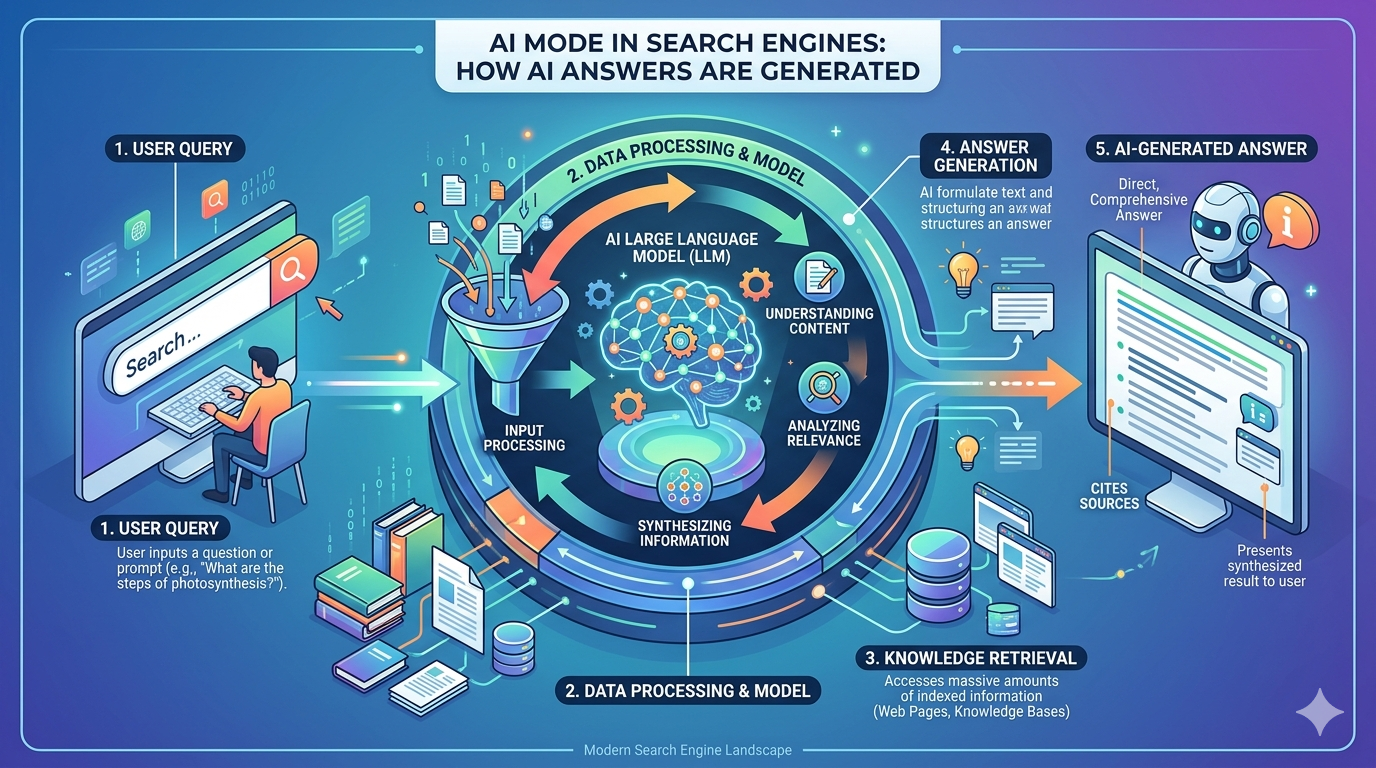
Query Interpretation
When a user submits a search query, the system analyzes intent using natural language processing (NLP).
- Queries may be informational, navigational, or transactional
- AI systems attempt to understand context, phrasing, and meaning rather than relying only on keywords
Retrieval of Indexed Information
Search engines maintain large indexes of web content.
- These indexes are built through automated crawling systems
- Content is evaluated using ranking systems that consider relevance, quality, and other signals
- AI Mode retrieves relevant documents before generating a response
AI Answer Generation
A language model processes retrieved content and generates a summarized response.
- The system may combine multiple sources into a single answer
- Responses are generated probabilistically based on patterns learned during training
- Some systems include citations or links to source material, depending on platform design
Ranking and Safety Layers
Before being shown to users, AI-generated answers pass through additional systems:
- Content quality and relevance checks
- Safety filters to reduce harmful or misleading outputs
- Policy enforcement aligned with platform guidelines
Continuous Updating
AI search systems may update responses dynamically:
- Based on new indexed content
- Changes in ranking signals
- Ongoing model improvements
Data and Privacy Considerations
Under the Data Privacy Act of 2012 (RA 10173) in the Philippines:
- Personal data processing must follow transparency, legitimate purpose, and proportionality principles
- Search platforms may process query data to improve systems, subject to their privacy policies
- Users are typically informed through platform disclosures about data usage and retention
Global standards such as transparency guidelines and consumer protection frameworks also influence how AI-generated answers are presented.
Evolution of Search Systems
Traditional search engines primarily returned ranked lists of links. Over time:
- Ranking systems incorporated semantic understanding and user intent
- Machine learning improved relevance scoring
- AI Mode represents a shift toward direct answer generation rather than link-based navigation
This evolution reflects broader developments in artificial intelligence and large-scale data processing.
FAQs
What is AI Mode in search engines?
AI Mode refers to features that generate direct answers using artificial intelligence instead of only displaying links. These systems combine search indexing with language models.
How do AI-generated answers differ from traditional search results?
Traditional results list webpages ranked by relevance. AI-generated answers summarize information into a single response, often using multiple sources.
Are AI answers always accurate?
AI-generated responses are based on available data and system design. Accuracy may vary depending on source quality, model limitations, and how information is interpreted.
Trusted Sources
- Google Search Central documentation
- National Privacy Commission (Philippines) guidelines
- Data Privacy Act of 2012 (RA 10173)
- Platform transparency and AI policy documentation (publicly available resources)
- Academic research on information retrieval and natural language processing
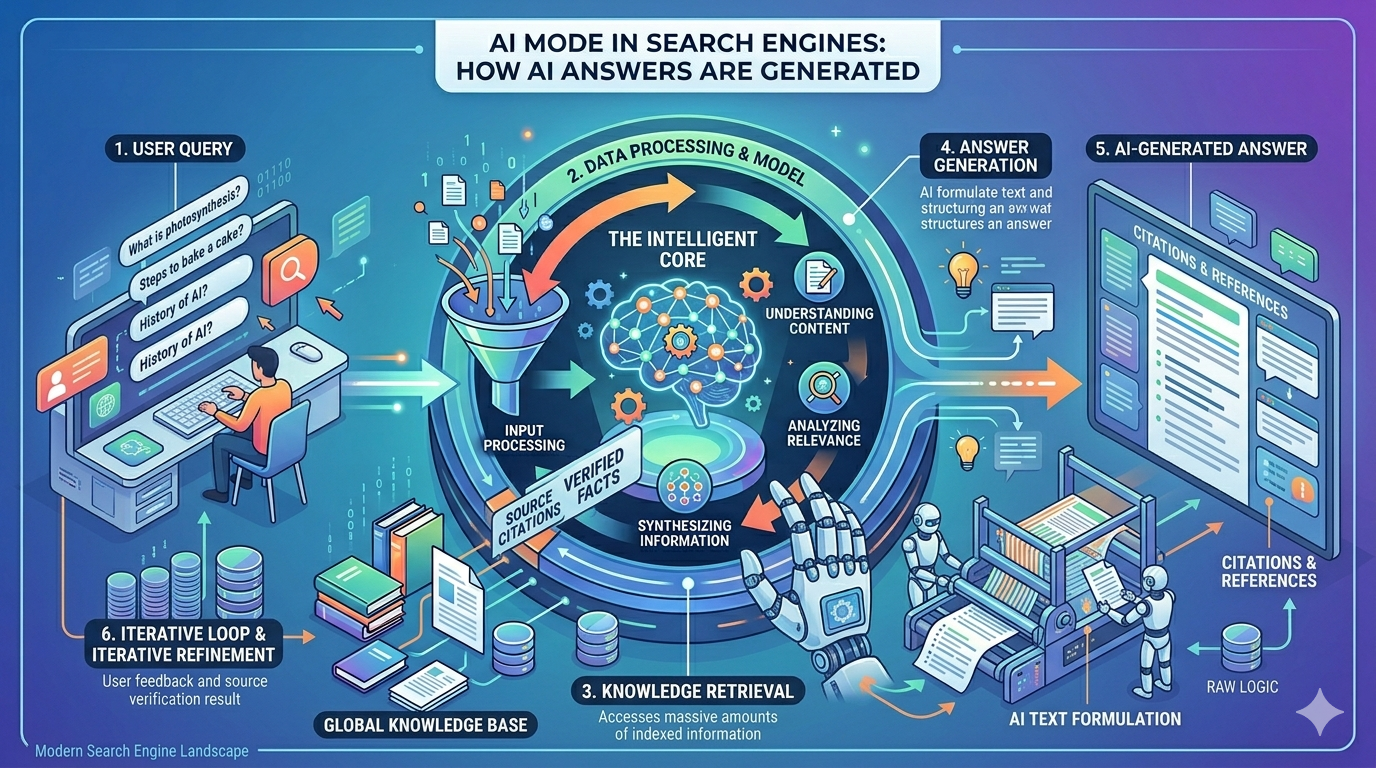
Visual sequence of AI search answer generation steps
Disclaimer
This content is for general informational and educational purposes only. It does not constitute professional marketing, legal, financial, or business advice. References to digital marketing tools, platforms, SEO strategies, or AI systems do not imply endorsement or guarantee results. Readers are encouraged to consult verified official sources and licensed professionals before making business or marketing decisions.