Content Outline
- Introduction to Digital Marketing
- Key Channels of Digital Marketing
- Search Engine Optimization (SEO)
- Social Media Marketing
- Email Marketing
- Paid Advertising (PPC)
- Content Marketing
- Benefits of Digital Marketing
- Common Digital Marketing Strategies
- Measuring Digital Marketing Success
- Practical Checklist for Getting Started
Introduction to Digital Marketing
Digital marketing refers to the use of online channels, tools, and platforms to connect with audiences, promote products or services, and build brand awareness. Unlike traditional marketing, which often relies on print, broadcast, or outdoor media, digital marketing leverages the internet and digital technologies. Businesses of all sizes commonly use digital marketing to reach targeted audiences in measurable ways.
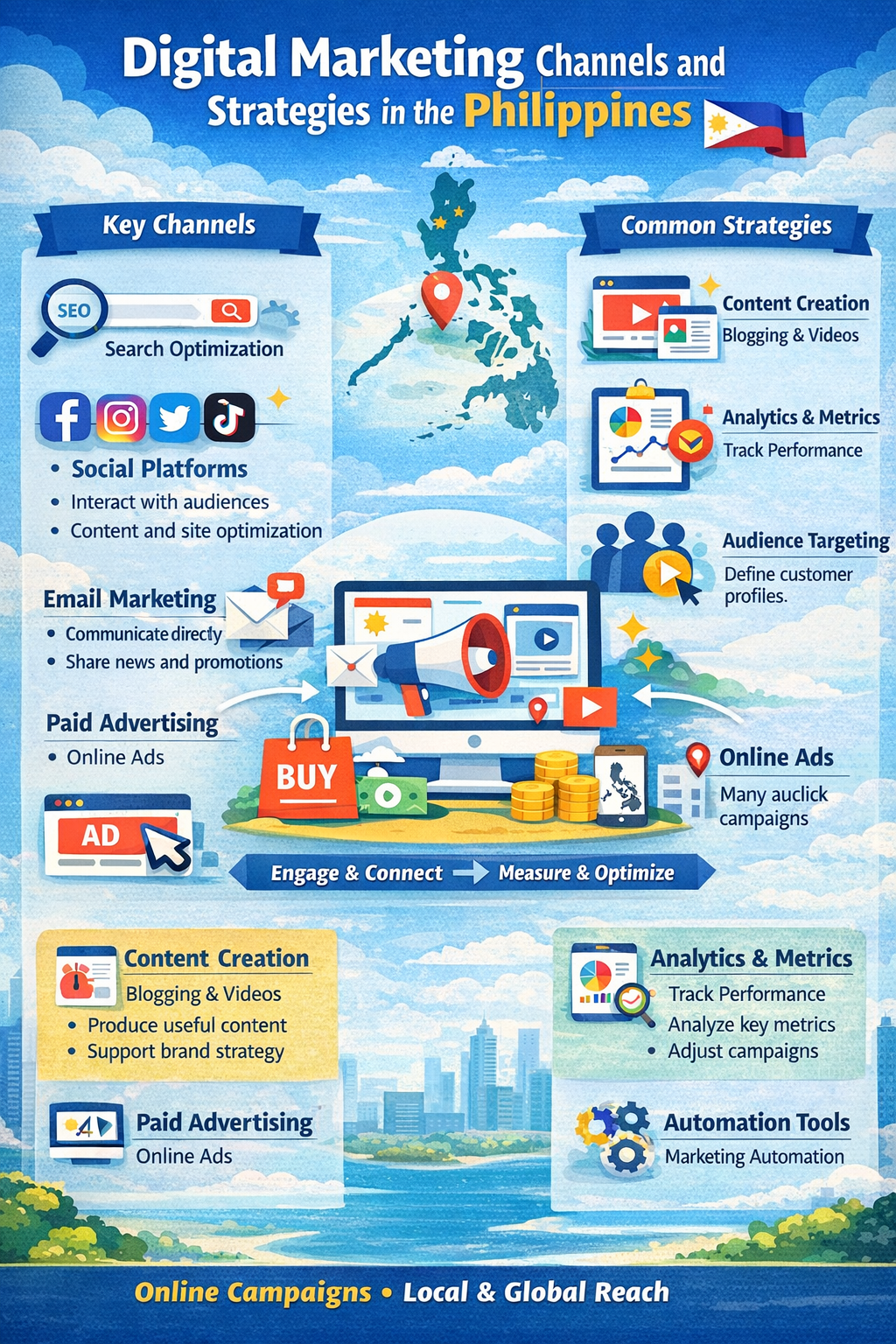
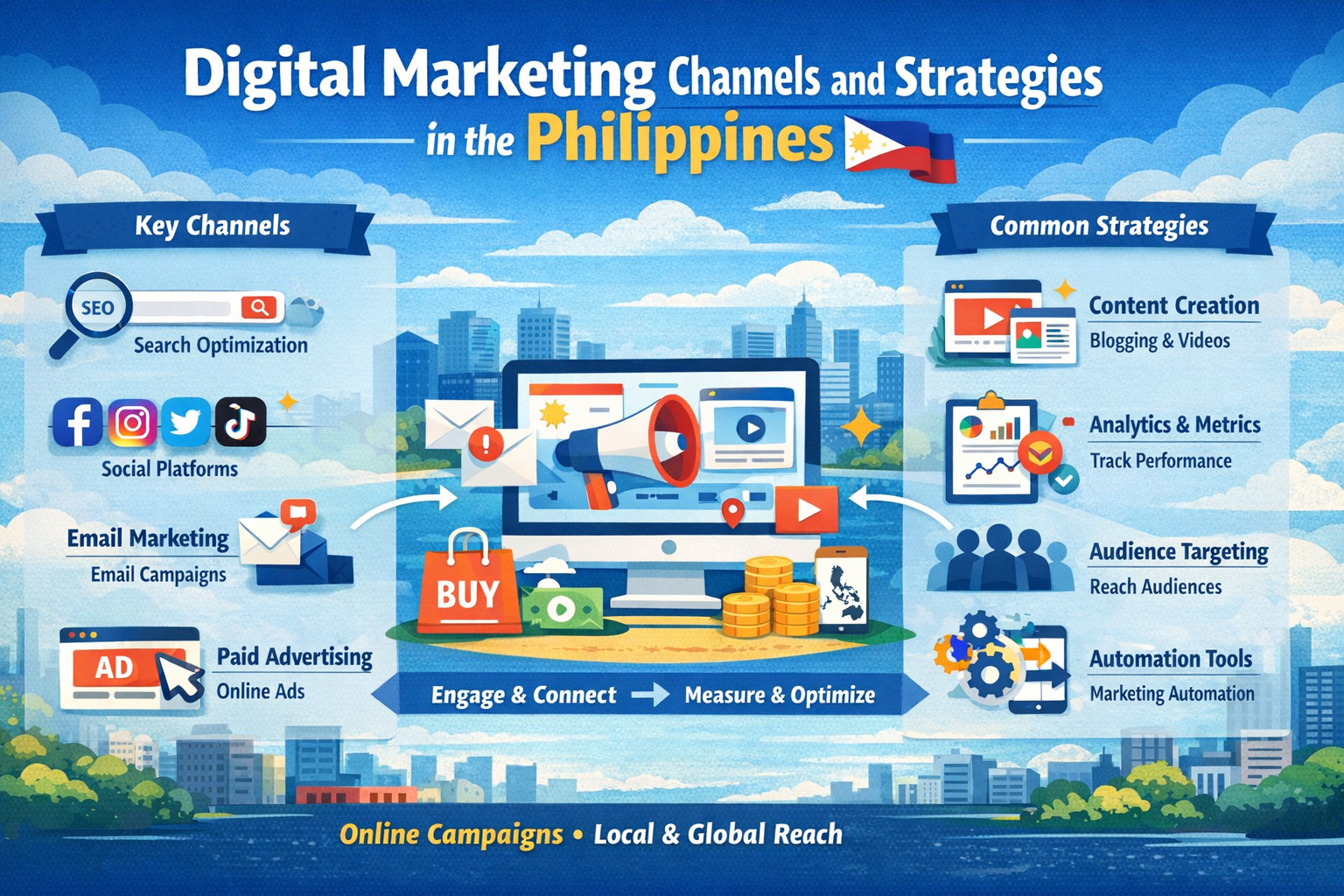
Illustrated infographic showing common digital marketing channels and workflows
Key Channels of Digital Marketing
Search Engine Optimization (SEO)
SEO involves optimizing a website or online content so that it can be discovered more easily via search engines. Techniques include keyword research, content creation, technical optimization, and link-building strategies. Results depend on consistent effort and platform updates.
Social Media Marketing
This channel uses platforms like Facebook, Instagram, TikTok, LinkedIn, and Twitter to engage audiences, share content, and promote products or services. Social media campaigns vary by region and platform rules, and performance depends on audience targeting and content quality.
Email Marketing
Email marketing is the process of sending targeted messages to subscribers. It is often used for newsletters, promotional campaigns, and customer engagement. Compliance with privacy laws and consent regulations is critical when using email marketing.
Paid Advertising (PPC)
Pay-per-click advertising allows businesses to display ads on search engines, social media, or other digital platforms. Advertisers only pay when a user clicks an ad. Campaigns must follow platform policies and local advertising regulations.
Content Marketing
Content marketing focuses on creating educational, entertaining, or informative content to attract and retain audiences. Blogs, videos, infographics, and podcasts are commonly used to provide value and support other marketing channels.
Benefits of Digital Marketing
Digital marketing offers measurable, cost-effective ways to reach specific audiences. It allows businesses to track engagement, adjust campaigns in real time, and scale marketing efforts globally or locally depending on goals.
Common Digital Marketing Strategies
-
Creating high-quality, search-optimized content
-
Engaging audiences on social media platforms
-
Running paid campaigns with clear targeting
-
Using email sequences to nurture leads
-
Analyzing data to inform strategy and improve performance
Measuring Digital Marketing Success
Success is typically measured using analytics tools to monitor key metrics like website traffic, conversion rates, social engagement, and return on ad spend. Metrics vary depending on objectives and platforms used.
Practical Checklist for Getting Started
-
Define target audience and marketing objectives
-
Choose appropriate digital channels for your business
-
Develop a content calendar and campaign plan
-
Track metrics using analytics tools
-
Adjust strategies based on performance insights
FAQ
1. Is digital marketing only for large companies?
No. Many small businesses use digital marketing to reach local and global audiences cost-effectively.
2. How long does it take to see results in digital marketing?
Results vary by channel, strategy, and execution. SEO often takes several months, while paid ads may show more immediate engagement.
3. Do I need technical skills for digital marketing?
Basic knowledge of platforms, analytics, and content creation is helpful, but many tools simplify management for beginners.
Overview Summary
Digital marketing is the practice of promoting products or services using online channels, including SEO, social media, email, and paid ads. It focuses on audience engagement, measurable results, and content creation. Effectiveness depends on strategy, platform policies, and audience context.
Trusted Sources / Standards
-
Google Search Central: SEO and digital marketing guidelines
-
Meta Business Help Center: Social media marketing best practices
-
TikTok Business Help Center: Platform-safe advertising
-
FTC Consumer Guidance: Advertising transparency
-
Philippine Consumer Act (RA 7394) and Data Privacy Act (RA 10173)
Disclaimer
“This content is provided for general educational purposes only. Digital marketing results vary depending on market conditions, platform rules, audience behavior, and execution.